
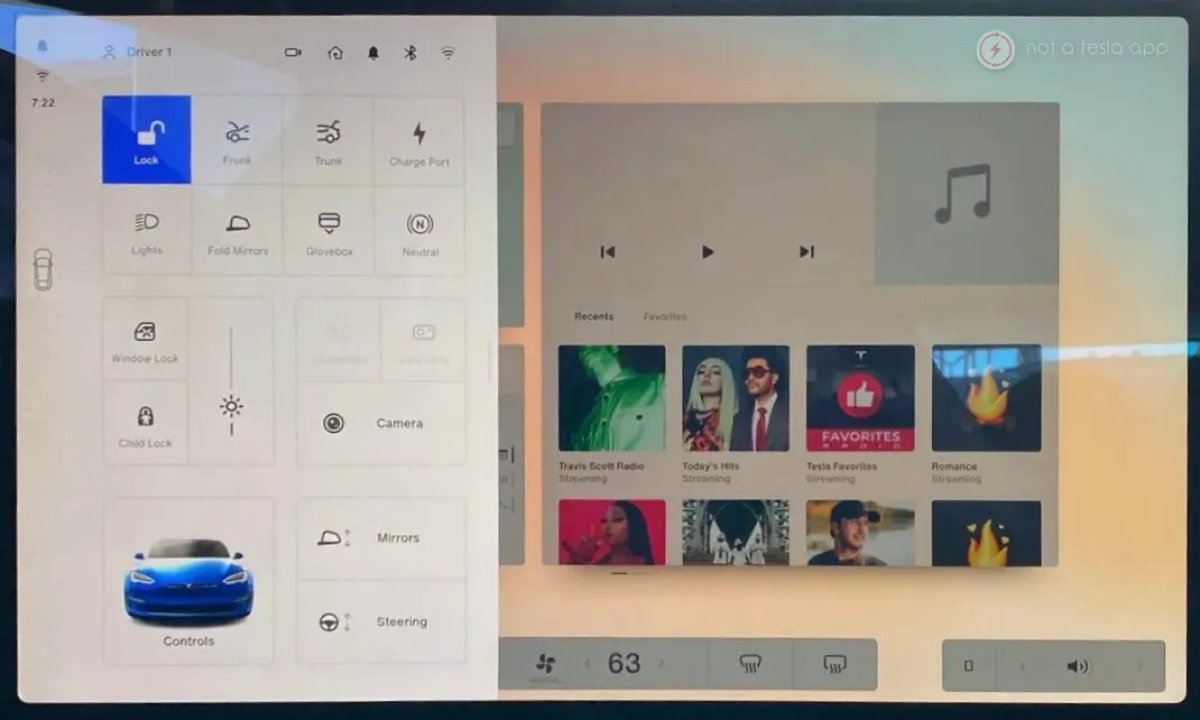

This article looks back at Tesla's V11 prototype, the anticipated update intended to refresh the Tesla user interface and introduce new module features to Tesla's OS.
The update had been expected around the holiday, similar to earlier major releases such as v9 and v10.
Before it reached production, the software was leaked online after someone found a Tesla-owned vehicle running a markedly different interface; the reveal generated excitement among many Tesla fans.
The leak occurred in 2021, and in hindsight it was clearly a prototype that was not destined for production. Tesla ultimately chose a different module design and later shipped a toned-down version of what had been seen in the leak.
The New UI
The leaked interface represented a major departure from Tesla's then-current UI. It appeared to use a programmatic design that allowed users to resize apps and place them on a customizable home screen. Each app looked responsive, enabling users to select sizes and arrange apps on the display—potentially one large app, multiple smaller widgets, or combinations of sizes.
The design emphasized customizability.
For example, the leaked images showed a smaller Maps widget in the top left with quick icons for Home, Work, and Charging. The bottom-left showed the older Phone app, which let users switch between Calendar, Messaging, and Phone; those functions have since been split into separate apps but retain the same capabilities. The right side of the screen displayed a larger media player. The key difference was that users could run multiple apps at once and adjust their size and placement.
A horizontal divider between the apps and the dock suggested users could have multiple home screens, similar to a smartphone. That would allow pages tailored to different contexts—one for driving, one for selecting music, another for use while parked, and so on.
Although Tesla's UI has advanced since the prototype surfaced, several of these concepts remain appealing, even five years later. Most vehicles still run a single app at a time with no way to alter its on-screen layout.
Dock
In 2021 there was no customizable dock, so one of the notable elements in the leaked images was a dock along the bottom that users could apparently add or remove apps from. Several core apps, such as the media player and Energy, were absent in the screenshot—presumably because they had not been added to the dock.
The version Tesla ultimately released as part of v11 was less customizable but more refined. Although the initial v11 release removed some controls like seat heaters, Tesla later enabled adding those back to the dock in a subsequent update. Today, users can add favorite apps to the dock while some space remains reserved for permanent icons like Controls and Sound, and Tesla fills remaining positions with recently used apps.
In the leaked concept users seemed to have full control over adding, removing, and positioning apps in the dock.
The dock hovered above other UI elements and did not span the full width of the screen as it does in the production UI, allowing apps and menus to appear behind it and display additional information.
It was never shown how users would access other apps; the square-like icon next to the volume control might have been an app drawer, or it could have been an icon for the phone app.
Vehicle Controls
The familiar car icon in the bottom-left corner, which normally houses vehicle settings, was not present on the main screen. Instead, a car icon on the left side of the display—also used to shift the vehicle from Drive to Reverse—revealed vehicle controls when tapped.
The grid-like layout shown in the Quick Controls menu suggested those icons might have been customizable. The visible icons included Lock Car, Frunk, Trunk, Neutral, and others that are not typically part of Quick Controls. It is not known whether that area was actually customizable.
To open the vehicle's full Controls menu in the prototype, a user would tap the car icon in the bottom-left of the Quick Controls panel, which then opened the complete Controls interface.
When the left-side car icon was tapped, the home screen widgets were zoomed out and dimmed, showing attention to visual detail in the prototype.
Visualization
The main-screen vehicle visualizations were absent in the leaked interface. Because the leak was observed on a Model S, visualizations were shown on the instrument cluster rather than the central screen. On a Model 3 or Model Y those visualizations might have been provided as a widget that could be resized or hidden, but the prototype was not observed outside the Model S.
Status Bar
In the prototype most status icons were moved to the left-hand bar, with additional icons appearing only when Quick Controls was opened. This resembles the final v11 behavior, where most status icons were removed from the status bar and displayed only within Controls.
Release
The prototype was leaked in March 2021, and although many users expected it would reach production, that never happened; the UI was not seen beyond the isolated incident.
What Tesla later released was regarded as a watered-down version of this prototype. While that release included a customizable dock, it lacked features shown in the leak such as responsive apps and multiple customizable home screens.
The leaked software was running on a Model S with MCU 3 (AMD Ryzen), but Tesla did not transition the Model 3 and Model Y to MCU 3 until December of that year. One possible reason the prototype was not released broadly is that it would not have been available on slower, Intel-based vehicles, which could have segmented the market and required supporting two different user interfaces.
Some of the prototype's concepts appeared less polished and user-friendly than the functionality Tesla eventually shipped. Although power users would have gained more control, Tesla's vehicles are positioned for a mass market and must prioritize ease of use for a wide range of customers.
Future Features
Although the prototype itself is unlikely to be released, elements of its design remain interesting. Tesla could at some point introduce features that let users resize apps and run multiple apps simultaneously.
Combined with multiple home screens and per-user layouts, those features would create a highly customizable interface. It remains possible Tesla will revisit some of these ideas in a future UI overhaul.













Condividi:
Tesla Announces the Discontinuation of the Model S and Model X [VIDEO]
Tesla Features Named After Pop Culture — and Their Origins: Sentry Mode, Plaid, Mad Max and More