

Tesla, long known for building technology from the ground up, has agreed to acquire an unnamed AI hardware company for up to $2 billion, according to its latest 10-Q filing.
The consideration will be paid primarily in Tesla common stock and equity awards. Approximately $1.8 billion of the total is "subject to certain service conditions and/or performance milestones dependent on the successful deployment of the company's technology." The filing confirms the price but does not disclose the target’s name, and Tesla has not identified it either.
A Rare Strategic Pivot
Acquisitions are uncommon for Tesla. The company prioritizes vertical integration and in-house development, including pursuing its own AI chip manufacturing plans via the TERAFAB project. To date, Tesla has acquired only roughly 10 companies, typically in battery technology or manufacturing automation.
The prospective target likely holds distinctive intellectual property beyond what Tesla and its current partners can supply. This stands out given Tesla’s close collaboration with Elon Musk’s xAI — which was recently acquired by SpaceX — through the TERAFAB project. Tesla even invested $2 billion into SpaceX to secure its stake in that ecosystem. If the company is allocating another $2 billion to a new player, it likely involves specialized sensors or low-power processors essential for mobile AI.
The Optimus Connection
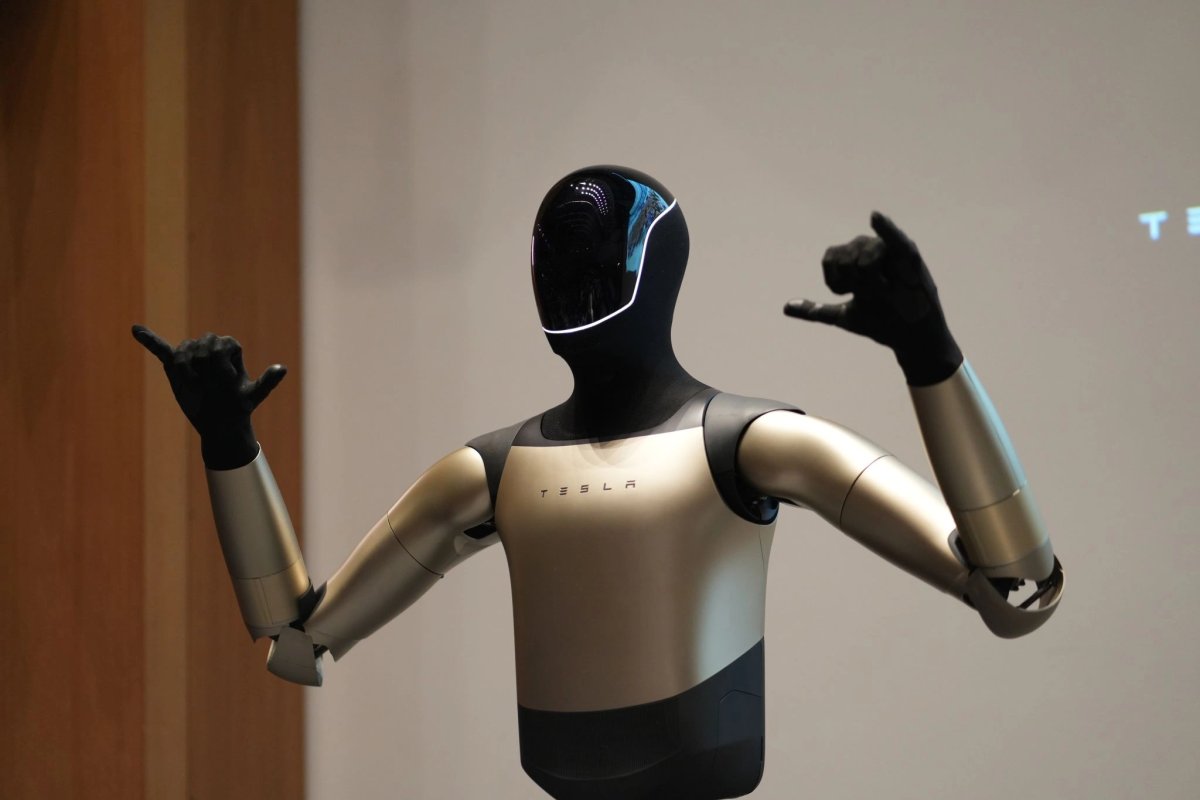
Speculation points to the Optimus humanoid robot. Tesla intends to unveil a production-ready version of Optimus later this year, and the hardware needed to enable bipedal movement, balance, and real-world interaction differs substantially from automotive requirements.
During the Q1 2026 Earnings Call earlier this week, Musk said the company is raising its capital expenditure outlook for the year from $20 billion to $25 billion. It is highly probable that this acquisition is a major component of that spending. Tesla likely needs AI silicon capable of real-time spatial reasoning at the "edge," which would be the holy grail for a robot intended to work in factories and homes.
Vertical Integration at Scale
Bringing the hardware team in-house would ensure future robots and vehicles are not dependent on outside suppliers like Nvidia or Intel for specialized functions. The approach aligns with the broader ecosystem in which Tesla, SpaceX, and xAI share data and engineering talent to move faster than traditional competitors.
As the deal progresses toward closing, the industry is watching to learn which company is being acquired. Whether it is a computer vision specialist or a pioneer in neural processing units, the move underscores that Tesla is positioning itself as an AI powerhouse.


Partager:
Tesla Opens Up Direct Sales to 50,000 Government Agencies With Sourcewell Contract
Tesla Finally Launches Robotaxi App for Android