
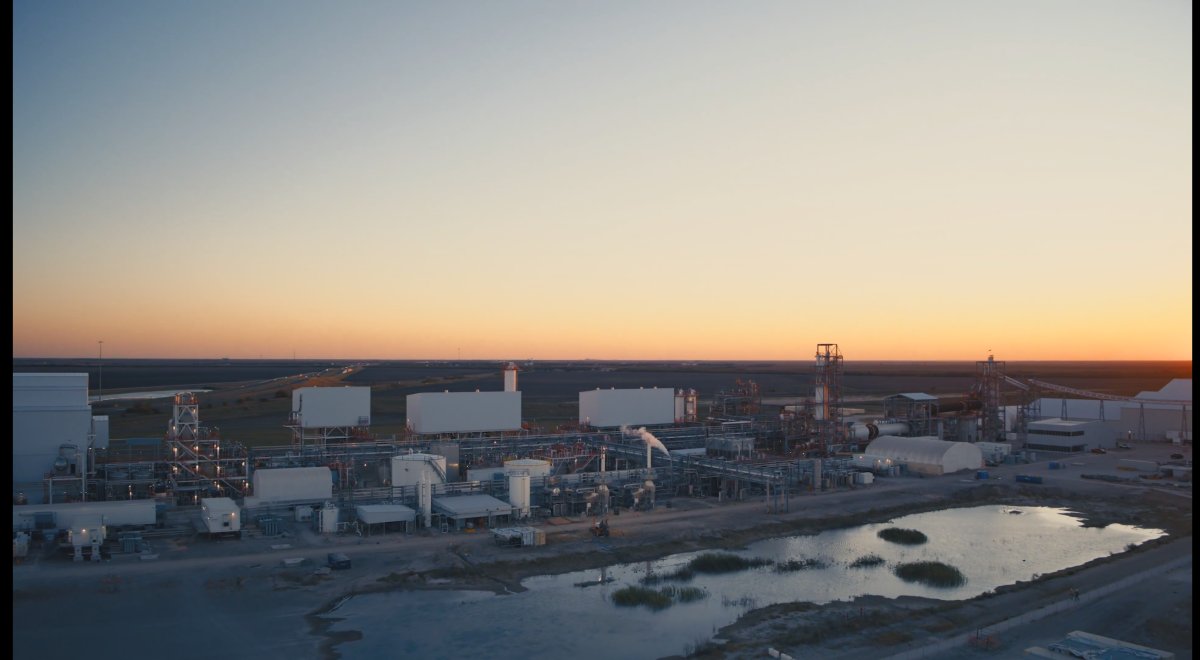

In a new video update released this week, Tesla confirmed that its massive Gulf Coast lithium refinery is fully operational, meeting the aggressive timeline set when the ground was broken just three years ago.
The Corpus Christi facility marks a major step for Tesla by bringing battery-grade lithium production to North America. The refinery is now processing raw spodumene concentrate into battery-grade lithium hydroxide, which will feed the cell factory at Giga Texas and reduce Tesla’s dependence on overseas refining.
Our Lithium Refinery ushers in energy independence for North America
— Tesla North America (@tesla_na) January 14, 2026
Regionalized access to critical battery minerals brings jobs, cuts emissions & helps accelerate our mission pic.twitter.com/zy8eFX7i3c
The video emphasizes how rapidly Tesla transitioned from construction to an operational plant, confirming the refinery has reached its full integrated startup milestone. Tesla is now working to ramp production toward a target of 50 GWh of battery-grade lithium each year, roughly enough to support about one million vehicles annually. Last year, Tesla produced 1.6 million vehicles worldwide, so the refinery’s planned output would cover more than enough lithium for all North American production.
Reducing Hazardous Chemicals
The most significant outcome is that the experimental phase at Corpus Christi is finished: the refinery is applying Tesla’s novel alkaline leach process at scale.
Unlike conventional refining, which relies on heavy sulfuric acid and generates hazardous sodium sulfate waste, Tesla’s acid-free approach is proving both cleaner and economically viable for large-scale production.
The primary byproduct is a benign, sand-like material called Analcime, which is being shipped for use in construction materials instead of being stored in toxic tailings ponds.
Energy Independence for North America
The refinery’s start-up strengthens energy security and independence across North America.
Previously, hard-rock lithium mined in North America or other Western countries often had to be shipped to China for refining before returning to the U.S. as battery cells. Tesla’s Texas refinery short-circuits that loop.
By processing ore domestically, Tesla has secured a critical choke point in the supply chain, lowering logistics costs, cutting emissions, and ensuring that batteries in its North American vehicles are sourced regionally—from the mine to the driveway—as part of the company’s vertical integration strategy.


















Partager:
Elon Musk Hints That Cybercab's True Innovation Lies Beneath the Surface
Tesla’s Lithium Refinery Enters Production — Eliminates Hazardous Byproducts and Reduces Costs