
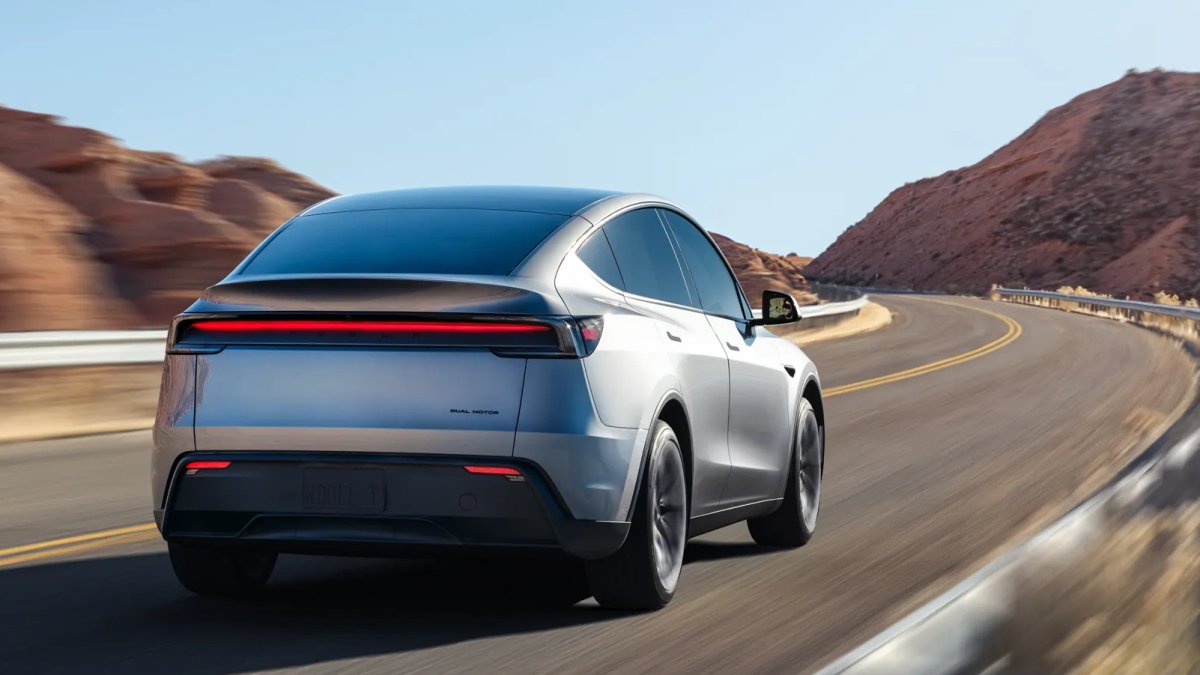

Tesla is rolling out software update 2026.8, which adds a quality-of-life feature for new Model Y owners called Comfort Braking. It is intended to eliminate the subtle jerk that can occur in the final moments before coming to a complete stop.
The feature will not appear on older-generation Teslas. Comfort Braking is exclusive to the refreshed Model Y due to significant hardware changes.
The Chauffeur Stop
According to the 2026.8 release notes, the update "now provides a smoother feel as you come to a complete stop during routine braking."
Drivers familiar with strong regenerative braking may recognize the slight "jerk" or rocking motion that can happen the instant the car fully stops. In automotive terms, easing off brake pressure at the very last moment to avoid that rock-back is known as a "chauffeur stop."
Comfort Braking automates that behavior. The software actively manages the friction brakes in the final moments of stopping, feathering pressure for a smooth, nearly imperceptible transition from rolling to a standstill.
Exclusive to the Refreshed Model Y
Although older vehicles also use regenerative braking to slow down, the refined Comfort Braking capability is hardware-locked to the refreshed Model Y because of its hydraulic architecture.
In an interview with Top Gear about Tesla’s engineering roadmap, Vice President of Vehicle Engineering Lars Moravy described the newer braking system. Unlike older vehicles, the refreshed design uses a dual master brake cylinder setup. This redundant, advanced hardware allows the computer to dynamically decouple the brake pedal from the physical calipers and manage hydraulic pressure with high precision.
Thanks to this dual-cylinder hardware, the vehicle can modulate the physical brake pads with micro-adjustments at zero miles per hour. Traditional single-cylinder brake boosters in older designs cannot match the same level of smoothness.
The Evolution of Brake Blending
Comfort Braking builds on software that Tesla introduced in prior releases.
Tesla earlier added “Apply Brakes When Regenerative Braking is Limited,” which keeps deceleration consistent by using the physical brakes when regenerative braking is limited. This lets the driver feel the same amount of deceleration whether regen is fully available or reduced.
More recently, Tesla introduced deceleration options in the new Model Y that allow regenerative braking even when the brake pedal is pressed, maximizing efficiency whether the driver lifts off the accelerator or applies the brake.
With the refreshed Model Y’s dual-cylinder hardware, the system now also gently applies the friction brakes at the end of a stop to make the final halt smoother.






Partager:
Musk: Tesla to Launch 'Terafab' AI Chip Factory Project Next Week
Tesla Now Owns a Piece of SpaceX After xAI Merger