
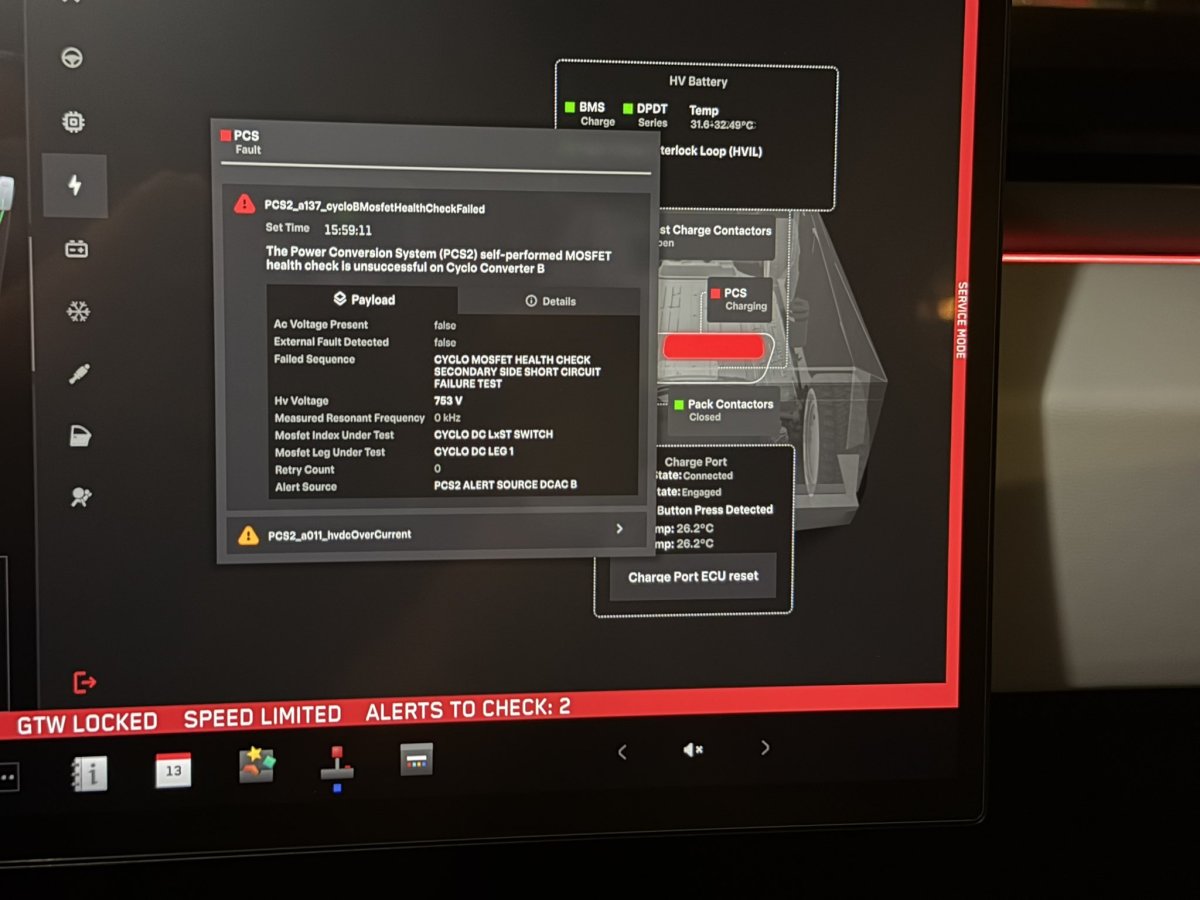

Los propietarios de Cybertruck están experimentando un problema de hardware creciente que impide que muchos carguen sus vehículos en casa. Una alta tasa de fallos en el Sistema de Conversión de Energía (PCS, por sus siglas en inglés) del vehículo está inhabilitando la carga de CA y exponiendo a los propietarios a facturas de reparación considerables fuera de la garantía.
Chicos, ¿qué le pasa a mi Cybertruck?
— LilHumansBigImpact (@BigImpactHumans) 15 de abril de 2026
¿Estoy acabado??? pic.twitter.com/ksoBEGfmym
Incluso con numerosos casos confirmados, códigos de diagnóstico identificables y retrasos reportados en los centros de servicio, todavía no existe una retirada formal de la NHTSA para este componente. El riesgo de una falla inesperada está haciendo que algunos propietarios se replanteen sus viajes debido a la posibilidad de quedarse varados.
Los síntomas
El PCS es un elemento central de la electrónica de potencia del Cybertruck. Combina el cargador de a bordo y el convertidor CC-CC en una sola unidad que gestiona toda la energía de corriente alterna que fluye hacia la batería, a la vez que reduce el voltaje del paquete de alta tensión para alimentar la arquitectura de bajo voltaje de 48 voltios del camión.
Las causas potenciales del fallo del PCS parecen estar relacionadas con MOSFETs defectuosos u otras piezas internas que se salen de sus especificaciones bajo cargas eléctricas pesadas. A menudo se han reportado fallos con muy poco kilometraje, frecuentemente por debajo de 10,000 a 18,000 millas, y en algunos casos han vuelto a ocurrir en el mismo vehículo incluso después de una sustitución completa del PCS.
Las señales de advertencia que pueden preceder a un fallo total incluyen:
- Avisos repentinos de "Carga de CA no disponible" en la pantalla principal
- Las velocidades de carga de CA se reducen de 48 A a 24 A o menos antes de fallar por completo en los cargadores domésticos
- Errores de salida de PowerShare V2L y PowerShare V2H
- Códigos de diagnóstico en modo Servicio relacionados con el PCS, incluidos PCS2_a094, PCS2_a095, PCS2_a137 y los relacionados con fallos de disparo por sobrecorriente de CC de alta tensión
En muchos casos, el camión sigue siendo funcional y puede usar carga rápida de CC en los Superchargers. Sin embargo, sin la carga de CA en casa, la usabilidad diaria se ve gravemente afectada hasta que se completen reparaciones importantes.
Reparaciones invasivas y altos costos
Reemplazar un PCS averiado no es un simple intercambio de piezas. Debido a que la unidad se encuentra profundamente dentro del vehículo, los técnicos deben retirar la cubierta de la caja (tonneau cover), el piso de la caja y elementos de la suspensión neumática para llegar a ella.
Bajo la Garantía Limitada Básica del Vehículo (4 años o 50,000 millas), Tesla cubre el reemplazo, a menudo instalando una revisión de hardware actualizada (Rev G) junto con un nuevo mazo de cables.
Para los vehículos con alto kilometraje que ya están fuera de garantía, el gasto ha sido considerable. Anteriormente, un reemplazo de PCS fuera de garantía oscilaba entre $5,000 y $7,200 por piezas y mano de obra. Tesla ha reducido recientemente este costo a aproximadamente $1,000 como un gesto de buena voluntad, aunque los propietarios siguen pagando por lo que parece ser un defecto de hardware sistémico.
Los centros de servicio también se enfrentan a graves escasez de piezas. Las fechas de recogida de los camiones afectados se han pospuesto repetidamente, y algunos propietarios informan que no tienen plazos firmes para las unidades de reemplazo. Según un propietario en redes sociales, un empleado de servicio de Tesla supuestamente admitió que los primeros 75,000 Cybertrucks tenían sistemas PCS defectuosos propensos a fallar.
Día 16
— Gary - contractorsPOV⚡;ル; (@contractorsPOV) 16 de abril de 2026
Fallo del PCS2 del Cybertruck, en servicio
Comenzó con 62% de carga y está en modo de baja potencia
Ahora en 39% y se esperan 2 semanas más hasta que lleguen las piezas.
¿Quién más ha estado esperando más tiempo? pic.twitter.com/eOtrHztct5
El problema de Terrestrial Armor
Las reparaciones son aún más complejas para los camiones equipados con la reequipación o el paquete de fábrica Terrestrial Armor. El blindaje de los bajos de alta resistencia debe ser retirado por completo y luego reinstalado cuidadosamente para acceder a la electrónica de potencia, que está profundamente enterrada.
Según la documentación de servicio, tratar con Terrestrial Armor puede aumentar el tiempo de reparación a aproximadamente ocho horas de mano de obra total. Para los propietarios fuera de su período de garantía, esta complejidad añadida significa que Tesla puede estar cobrando un sobreprecio masivo en horas de mano de obra solo para acceder al componente defectuoso, añadiendo un impacto financiero significativo a una avería ya de por sí frustrante.
La discrepancia en la garantía
Tesla introdujo recientemente una nueva garantía de componentes de propulsión ZEV de 7 años/70,000 millas para los Cybertruck del año modelo 2026 en adelante, que cubre explícitamente componentes de propulsión de alto costo como el PCS.
Los primeros compradores de los camiones Foundation Series de 2024 y 2025 no reciben esta protección con carácter retroactivo. Para esos vehículos, el PCS solo está cubierto bajo la garantía básica del vehículo, que expira a las 50,000 millas.
A diferencia del Model S, Model 3, Model X y Model Y, Tesla no ofrece actualmente una suscripción de Acuerdo de Servicio Extendido (ESA) para el Cybertruck. Los propietarios de los primeros modelos están totalmente expuestos a los costos de reparación una vez que superan la marca de las 50,000 millas.
¿Dónde está la retirada?
A pesar de un claro patrón de fallos en docenas de vehículos confirmados, y los informes de que algunos centros de servicio reemplazan proactivamente el PCS cuando los camiones llegan para trabajos no relacionados de neumáticos o molduras, no hay una retirada oficial de la NHTSA ni una notificación proactiva al propietario que aborde específicamente el defecto de hardware del PCS.
Por ahora, los primeros propietarios de Cybertruck se quedan esperando que su PCS falle dentro de la ventana de garantía inicial de 50,000 millas o que dure lo suficiente como para que haya un reconocimiento general y una retirada del mercado.




Compartir:
Tesla actualiza la aplicación de energía en la actualización de primavera (2026.14): viajes personalizados, pausa y nuevos widgets [VIDEO]
Tesla lanza un servicio de robotaxi sin supervisión en Dallas y Houston