
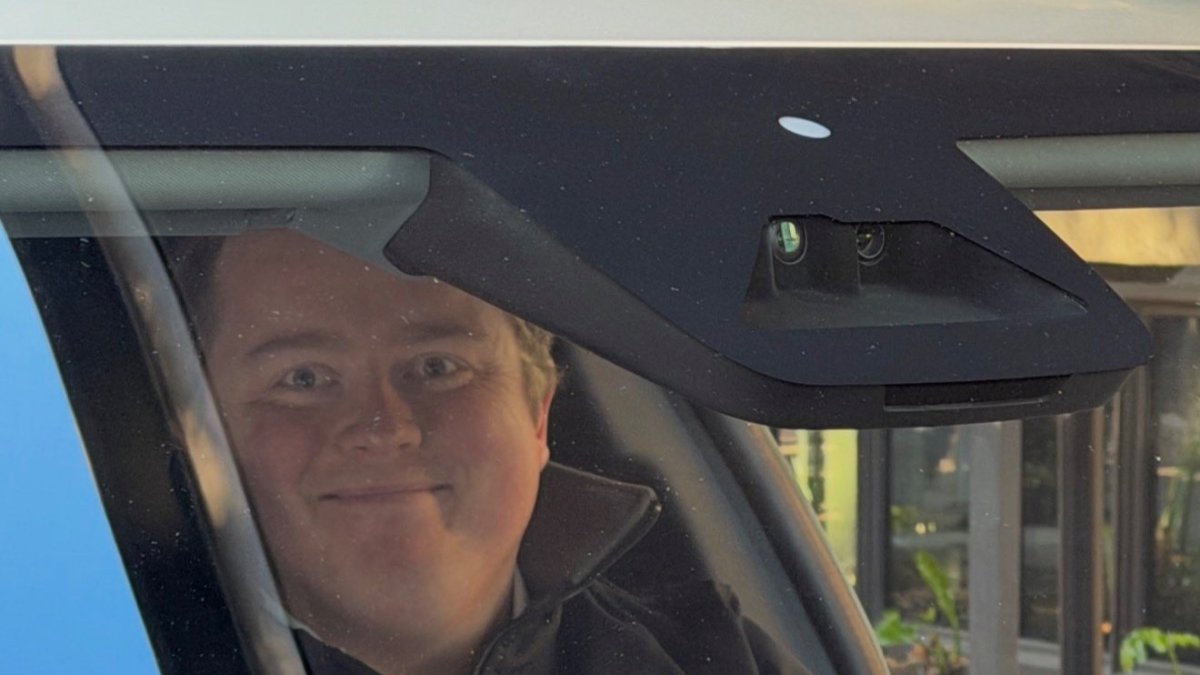

A medida que Tesla se acerca al debut de su servicio de transporte autónomo, las recientes unidades del Cybercab exhibidas han revelado actualizaciones notables, que incluyen cámaras frontales mucho más grandes y una nueva iluminación ambiental integrada en las puertas.
Las fotos compartidas por @DavidMoss en X muestran un conjunto de cámaras sustancialmente ampliado detrás del parabrisas. El avistamiento ha suscitado el debate de que Tesla podría estar evaluando un nuevo paquete de hardware para la Conducción Autónoma Total (Full Self-Driving), posiblemente un paso previo hacia la IA5 (Hardware 5). Aunque no se espera que el ordenador de IA5 de próxima generación entre en producción masiva hasta mediados de 2027, las lentes más grandes indican una mejora en el sistema óptico diseñada para dar soporte a un vehículo sin volante ni pedales.
Las vistas en primer plano revelan lentes más grandes y pequeños separadores entre cada cámara orientada hacia adelante.
Nuevo hardware y refinamientos interiores
Otra unidad de producción mostrada recientemente en la sede del Departamento de Transporte de EE. UU. (USDOT) en Washington, D.C., presentaba una cámara muy grande orientada hacia la cabina y, por primera vez, una cámara en el maletero interior. Este sensor orientado hacia atrás parece tener como objetivo ayudar a garantizar que los pasajeros no olviden objetos personales tras finalizar un viaje.

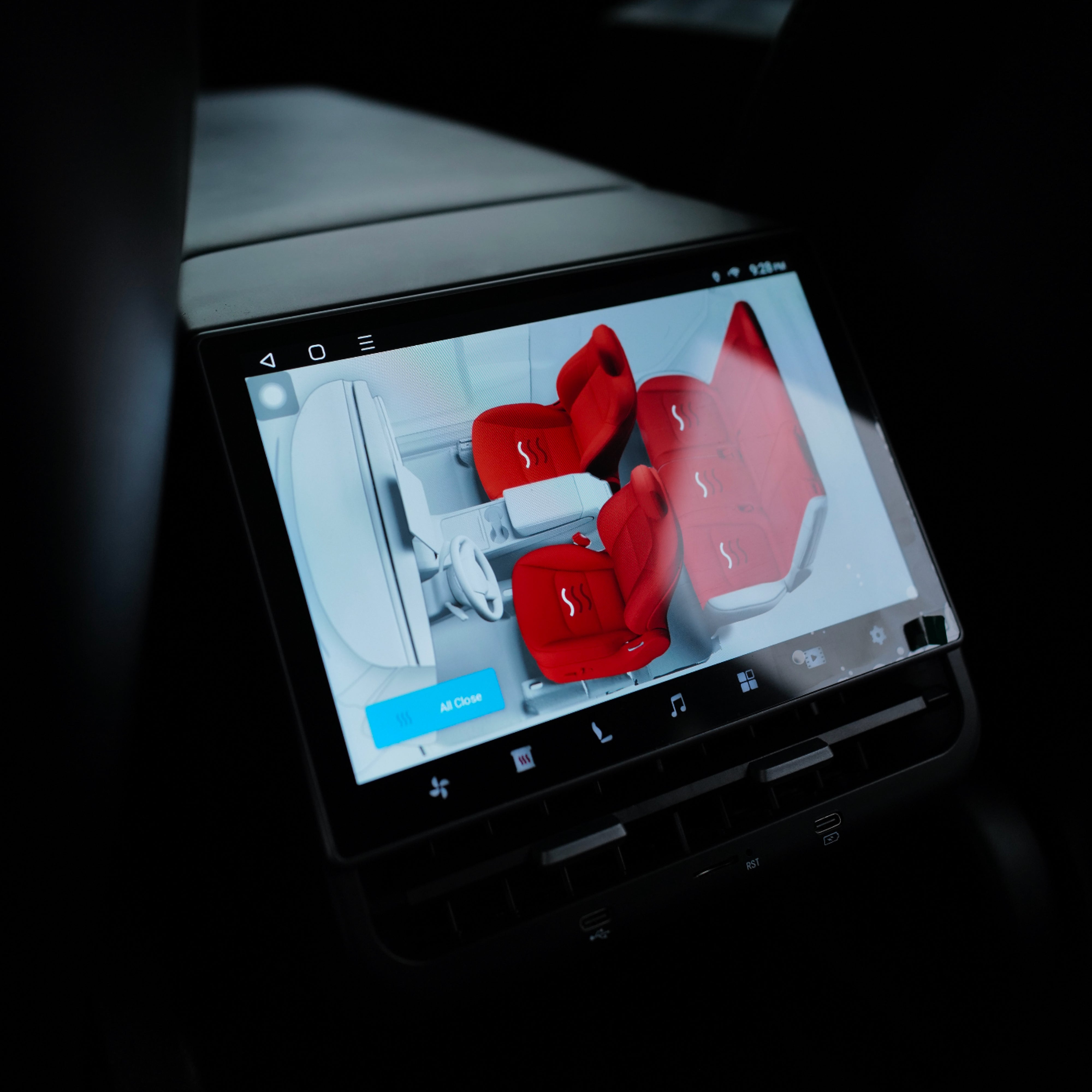
Tesla también ha revisado la cabina del Cybercab para mejorar su durabilidad en escenarios de uso intensivo. El maletero tapizado del concepto ha sido reemplazado por una superficie más resistente y sin tapizado. Además, los interruptores de las ventanillas y los puertos USB-C ahora parecen estar situados debajo de la pantalla táctil central de 21 pulgadas. En una unidad vista a principios de esta semana en la sede del USDOT, los controles de las ventanillas estaban colocados cerca de los portavasos en la consola central. El interior sigue siendo extremadamente minimalista, con solo un botón de parada de emergencia montado sobre la pantalla, que además incluye braille.

Iluminación ambiental
Se han añadido finas tiras de iluminación ambiental en los marcos de las puertas. En avistamientos recientes, la tira emite un suave resplandor azul, realzando el aspecto futurista a la vez que ofrece una iluminación útil para que los pasajeros entren y salgan por la noche, un toque útil para un servicio destinado a operar las 24 horas del día, los 7 días de la semana.

Ruedas
Los ejemplares listos para la producción también destacan detalles que se ajustan a su posicionamiento como "robotaxi premium". El vehículo utiliza una configuración escalonada con neumáticos 215/60R/18 en la parte delantera y 225/60R/21 en la parte trasera para manejar el par motor. Los neumáticos son Continental aContact, combinados con tapacubos aerodinámicos lisos de disco completo.

Construido para un futuro sin conductor
El Cybercab es un vehículo eléctrico de dos plazas construido específicamente para ser la base de la red Tesla Robotaxi. Debido a que depende exclusivamente de cámaras, cada cámara externa está equipada con un sistema de lavado a alta presión para que el hardware de Conducción Autónoma Total pueda mantener una visión clara en condiciones adversas sin asistencia humana.

Las primeras unidades fueron vistas en la Giga Texas sin controles tradicionales, aunque algunos vehículos de producción inicial podrían incluir volantes para cumplir con las normas regionales. El objetivo a largo plazo es una experiencia totalmente inalámbrica y sin volante. Tesla ha recibido la aprobación de la FCC para la banda ultraancha (UWB), que servirá de base para el sistema de carga por inducción inalámbrica previsto para el vehículo.
Cronograma de producción
La primera unidad de producción del Cybercab ha salido de la línea de montaje en la Giga Texas, y la producción masiva está programada oficialmente para comenzar en abril.
A medida que se acerca esa fecha, estas revisiones de hardware, incrementales pero importantes, indican un enfoque en la fiabilidad de la visión "sin supervisión". Para Tesla, el avance hacia la operación sin conductor es inminente, con las líneas de ensamblaje listas para aumentar su ritmo en las próximas semanas.



Compartir:
Notas de la versión 2026.8
Musk: Tesla lanzará el proyecto de fábrica de chips de IA 'Terafab' la próxima semana