
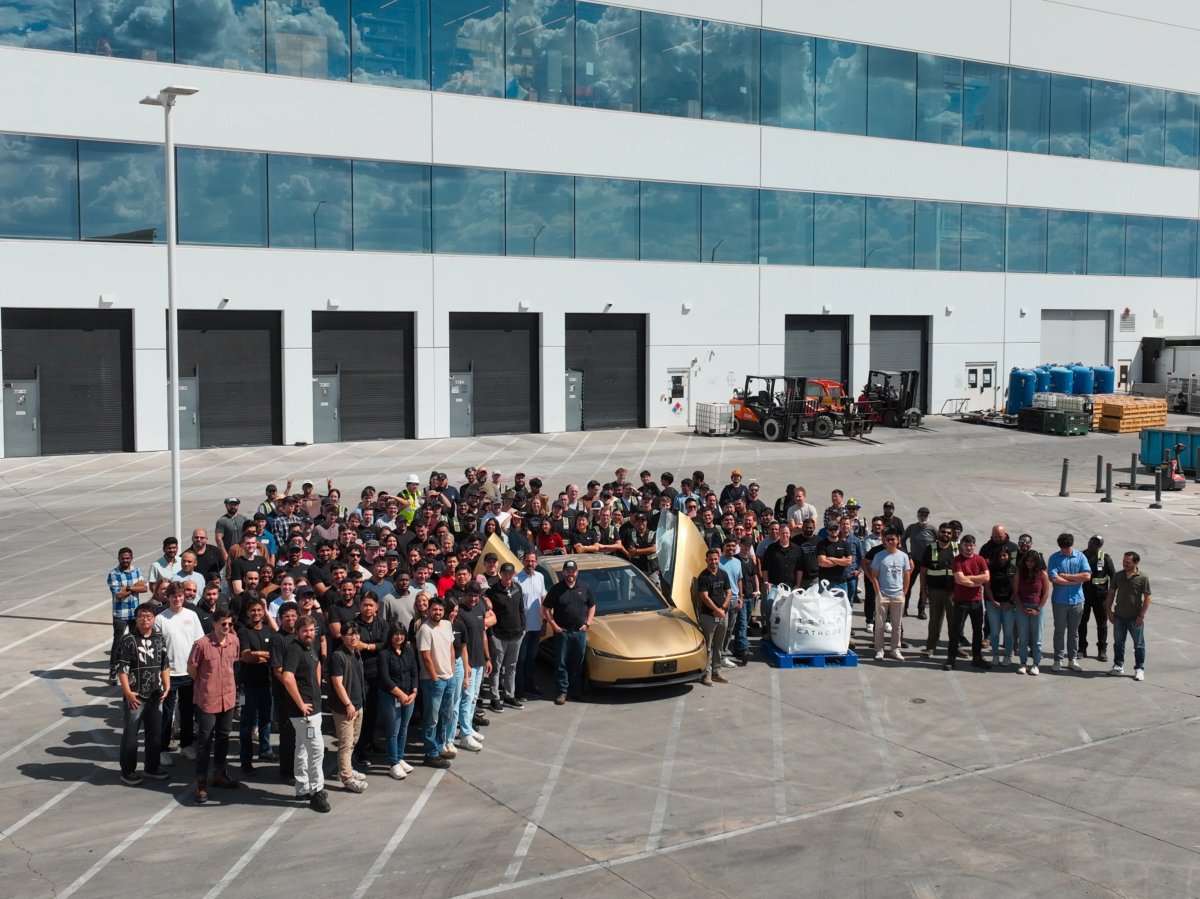

Tesla has reached a key localization milestone: the first Cybercab assembled with cathode active material produced entirely in-house has rolled off the line at Gigafactory Texas.
The milestone was confirmed by Tesla’s official Robotaxi account on X, which posted: “First Cybercab made using our in-house cathode material – from the first cathode plant in the Americas.”
The achievement caps a multi-year push to master dry-cathode 4680 battery manufacturing. Tesla’s dry cathode process cuts battery costs, and producing the raw active electrode powder domestically pushes vertical integration to a new level.
Inside the Texas Cathode Plant
The active material used in this Cybercab comes from Tesla’s dedicated cathode plant located on-site at Giga Texas. The facility went online last month and represents the first large-scale cathode production facility in North America.
We are operating the first large scale cathode production facility in North America as part of our 4680 cell production in Austin, TX pic.twitter.com/awgdsmvgH7
— Tesla North America (@tesla_na) August 21, 2026
Inside the facility, production begins by mixing precursor — made of nickel, manganese, and cobalt — with lithium hydroxide. The mixture is densified, baked in industrial kilns, and passed through specialized sieves to remove magnetic impurities before it is bagged as finished cathode active material. That feedstock has now entered Tesla’s production pipeline.
Beyond reducing logistics costs and avoiding overseas supply disruptions, the internal process is designed to be 74% more efficient in terms of greenhouse gas emissions compared to traditional tier-one suppliers.
Built for Maximum Operating Efficiency
The Giga Texas-made material feeds directly into the Cybercab’s structural battery pack, which uses dry-cathode 4680 cells and delivers a calculated usable capacity of 47.6 kWh.

Because the purpose-built robotaxi is designed for round-the-clock autonomous service, efficiency dictates every decision. Paired with a new single-motor drive unit, Tesla says the Cybercab is nearly 40% more efficient than a Model Y.
The Cybercab drive unit assembly line operates fully automated and can assemble a complete drive unit every 10 seconds.
By combining an ultra-efficient powertrain with in-house 4680 battery cells and domestically refined cathode powder, Tesla is methodically pushing operating costs toward its sub-$0.20 per mile goal. With Cybercabs finally offering commercial driverless rides to the public and now rolling off the production line with locally sourced battery chemistry, the groundwork for affordable, large-scale autonomous transport is taking shape in Austin.



Share:
Tesla App Leaks New Optimus Gen 3 Robot Design
Tesla Expands Immersive Audio X to Model 3 and Y in China