
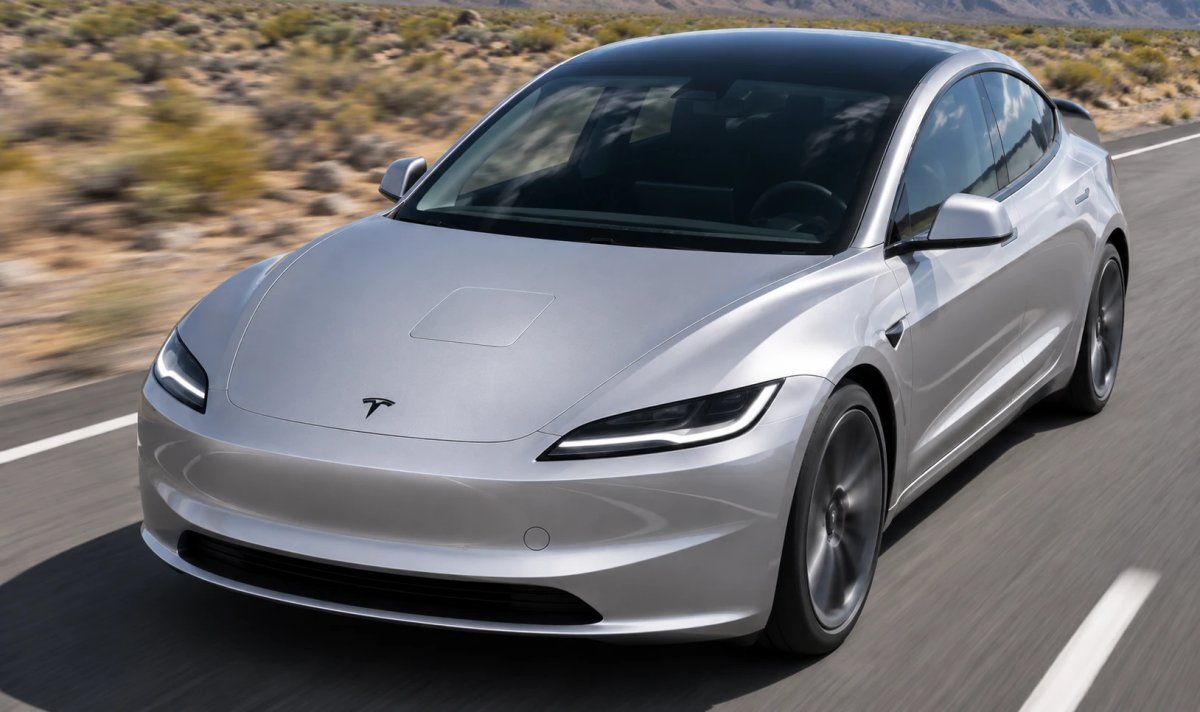
Musk Targets Starlink Integration in Tesla Vehicles by Late 2027

Elon Musk said he aims to bring Starlink connectivity to Tesla vehicles by the end of next year, indicating that dishes could begin appearing across the lineup by the end of 2027. He confirmed the target on X. The plan follows earlier work to integrate satellite hardware into Cybercab.
Starlink Coming in Late 2027
Musk responded to a request for lineup-wide Starlink integration by saying it could become available toward the end of 2027. He added that Starlink will play a role in unsupervised FSD by providing a redundant communications path. Autonomous vehicles rely on connectivity to coordinate with passengers awaiting pickup and to reach Tesla support when necessary.
Although Cybercab includes integrated Starlink, customers cannot access it yet; it is currently used only for Tesla to connect to its vehicles. Musk also noted that China would be excluded because Starlink is not permitted there.
In August, Musk said he expected Starlink to eventually reach all cars, though no timeline was given until now.
Cybercab Already Has Starlink
In July, Cybercab was shown with a built-in Starlink V5 antenna integrated into the rear of the vehicle. More recently, updated first responder documentation indicated that Cybercabs manufactured beginning in November 2026 include Starlink hardware in their trunk lids.
Cybercab also features cellular connectivity, giving the vehicle two independent ways to connect to Teslas network.
Why Starlink Matters
As Tesla moves toward unsupervised driving, dependable connectivity supports navigation, fleet operations, remote assistance, and passenger communications. Teslas VP, Ashok Elluswamy, has explained that an internet connection is not required for the vehicle to drive safely; instead, it enables services surrounding autonomous operation.
Starlink offers an alternative when cellular coverage is unavailable or unreliable, especially in remote regions. However, satellite links need a relatively clear view of the sky, and tunnels, parking garages, buildings, and trees can interfere. That makes Starlink better suited as a backup to cellular rather than a complete replacement.
Could Tesla Replace Cellular Providers?
Tesla currently uses AT&T for cellular connectivity in the United States, along with other carriers internationally. SpaceX is developing Starlink Mobile as a cellular carrier and has been acquiring wireless spectrum to combine satellite coverage with terrestrial networks.
In the future, Tesla could potentially use Starlink Mobile for vehicle connectivity instead of paying traditional carriers. That approach would be separate from the dedicated satellite antennas being introduced in Cybercab.


Compartir:
Tesla FSD (Supervised) v15.0.1 Adds Tesla Reality View, Calm Mode
Tesla’s AI4.5 FSD Gets 48GB RAM, LPDDR5X; Production Mid-2027