
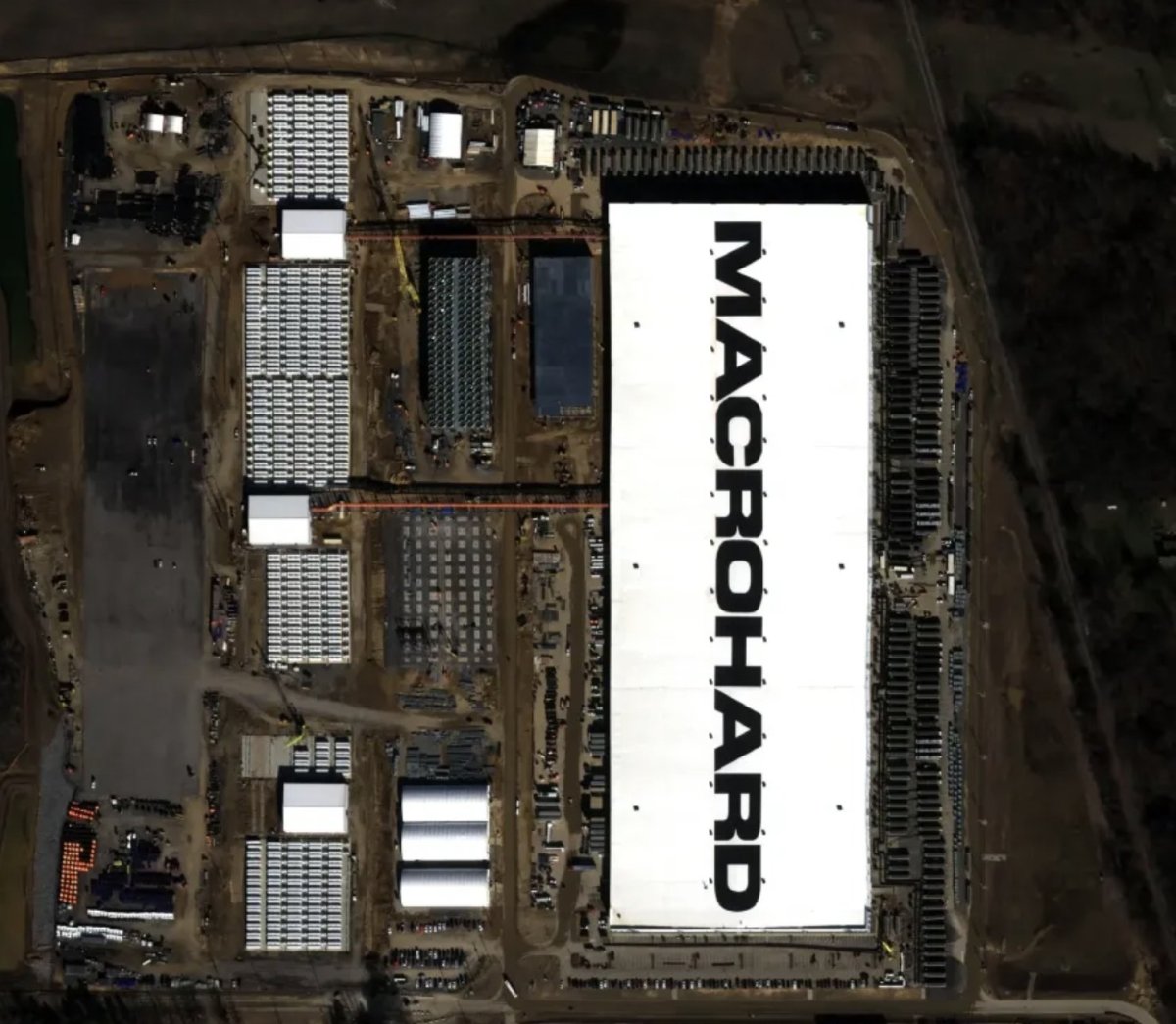

As AI consumes a growing share of global electricity, large-scale training sites require something traditional utilities cant guarantee on their own: rock-solid power stability. Stationary battery storage provides that stability, and Tesla Energy has been deploying it at unprecedented scale.
Tesla Energy has now hit two milestones in quick succession: supplying the worlds largest supercomputer in Memphis for xAI and energizing the compute that trains the next generation of FSD at Giga Texas.
Colossus 2: $585 Million of Batteries
xAIs Colossus 2 supercomputeralready the most powerful in the worldnow has a battery system to match. xAI and Tesla Energy recently completed the installation of approximately 600 Megapacks at the Memphis, Tennessee facility.
The deployment provides about 2.3 GWh of energy storageenough to power a small city or support the massive grid demand created by more than 100,000 NVIDIA H100 and H200 GPUs at the site.
Based on current Tesla Energy pricing, the project is valued at roughly $585 million, placing it among the worlds largest battery energy storage installations. Rather than grid arbitrage, these batteries serve as a dedicated buffer for Colossus and Colossus 2, smoothing training-related power spikes so they dont destabilize the local grid or trigger brownouts during peak compute loads.
Cortex 2 in Austin
In Austin, hardware to train the next generation of FSDboth Unsupervised and for Optimusis now arriving.
Drone footage from Giga Texas watcher Joe Tegtmeyer shows Tesla receiving Megapacks for its new Cortex 2 supercomputer. The Cortex 2 cluster is expected to be a 500 MW system, focused primarily on training Optimus.
The Cortex 2 chiller systems (Part 1 & 2) are making quick progress at Giga Texas today, with Part 1 having 4 of the 6 fan enclosures, pipe systems and even some exterior wall segments being installed. The overall height of this chiller is significantly higher than the Cortex… pic.twitter.com/HRZxe8qyM1
— Joe Tegtmeyer 🚀 🤠🛸😎 (@JoeTegtmeyer) January 20, 2026
The Megapack arrivals suggest the facility is approaching its initial power-up. As in Memphis, the batteries will stabilize the roughly 500 MW draw required to train end-to-end neural networks that enable Optimus to navigate factories, perform complex tasks, and more.
Overcoming Grid Limitations
Together, these projects spotlight a key bottleneck in the AI race: power. As xAI and Tesla scale their training clusters, the constraint is no longer just securing NVIDIA GPU allocations; its obtaining a steady, high-capacity electricity supply to run them.
By integrating large battery storage directly with compute, Elon Musk is effectively building dedicated utility infrastructure to sidestep grid constraints.





Teilen:
Tesla App Update 4.53: Powershare Limit Control, Automatic Damage Detection, Brake-by-Wire
Tesla FSD Hardware 4.5 Appears: A 3-Chip Upgrade Before AI5?