Reddit Buzz · Diese Woche
NACS Won, But Your Tesla Still Needs a CCS Adapter (2026)
Every major automaker adopted Tesla's plug, but 37,000+ U.S. fast chargers are still CCS1. Here is when a CCS1 and J1772 adapter helps, and how to pick a safe one.


Quick answer
Yes, a Tesla can still benefit from an adapter even though NACS won. Every major automaker has adopted Tesla's plug, but the U.S. still has 37,367 CCS1 fast-charging connectors (AFDC, Sept 1, 2026), and about 74% of the new non-Tesla fast-charging connectors built in Q3 2026 were CCS1. A CCS1 adapter opens those stations. A J1772 adapter opens the everyday Level 2 chargers at hotels, workplaces and garages.
You don't need one on every trip. Think of it as insurance for the day a Supercharger is down, full or too far away.
Ford, GM, Hyundai, Toyota and even Stellantis can now plug into Superchargers. Tesla's connector is the new North American standard. So why would a Tesla owner ever need to plug into anything else?
Because standards change faster than concrete. The plug on your car won, but most of the chargers around it were built for a different one. Here's what the latest U.S. data says, when an adapter actually helps, and how to pick one that is safe.
Did NACS really win?
Yes. Tesla opened its connector design as the North American Charging Standard in November 2022, and SAE International turned it into the SAE J3400 standard over 2023 and 2024. Almost every major brand announced the switch within a year.
The proof is Supercharger access. Here is when some of the biggest names got in:
| Automaker | Supercharger access opened |
|---|---|
| Ford | Supercharger access opened: Feb 29, 2024 |
| Rivian | Supercharger access opened: Mar 18, 2024 |
| General Motors | Supercharger access opened: Sept 18, 2024 |
| Hyundai | Supercharger access opened: Mar 25, 2025 |
| Toyota | Supercharger access opened: Oct 22, 2025 |
| Stellantis | Supercharger access opened: Mar 19, 2026 |
New cars are following. The Hyundai Ioniq 5, Kia EV6 and EV9, the refreshed Nissan Leaf, Rivian's current lineup and the Lucid Gravity all ship with a native NACS port. For Tesla owners that is good news: more drivers, more investment, more pressure to keep Superchargers reliable.
Why are there still so many CCS chargers?
As of September 1, 2026, the U.S. had about 76,000 public DC fast-charging ports at roughly 15,800 locations. Tesla runs just under half of those ports. The rest belong to Electrify America (5,936), EVgo (5,246), ChargePoint (4,937) and a long tail of smaller networks (12,382), and most of that hardware was built around the CCS1 plug.
| Connector (U.S. DC fast charging) | Count, Sept 2026 | Net change in 2026 |
|---|---|---|
| NACS (Tesla) | Count, Sept 2026: 37,995 | Net change in 2026: +2,313 |
| NACS (non-Tesla) | Count, Sept 2026: 4,543 | Net change in 2026: +2,758 |
| CCS1 | Count, Sept 2026: 37,367 | Net change in 2026: +6,001 |
| CHAdeMO | Count, Sept 2026: 8,426 | Net change in 2026: -450 |
Two numbers explain the gap. CCS1 added more than 6,000 connectors in eight months, more than any other standard. And in Q3 2026, roughly 74% of the new non-Tesla fast-charging connectors were CCS1 while 23% were NACS. NACS is still only about 9% of the non-Tesla connectors installed today.
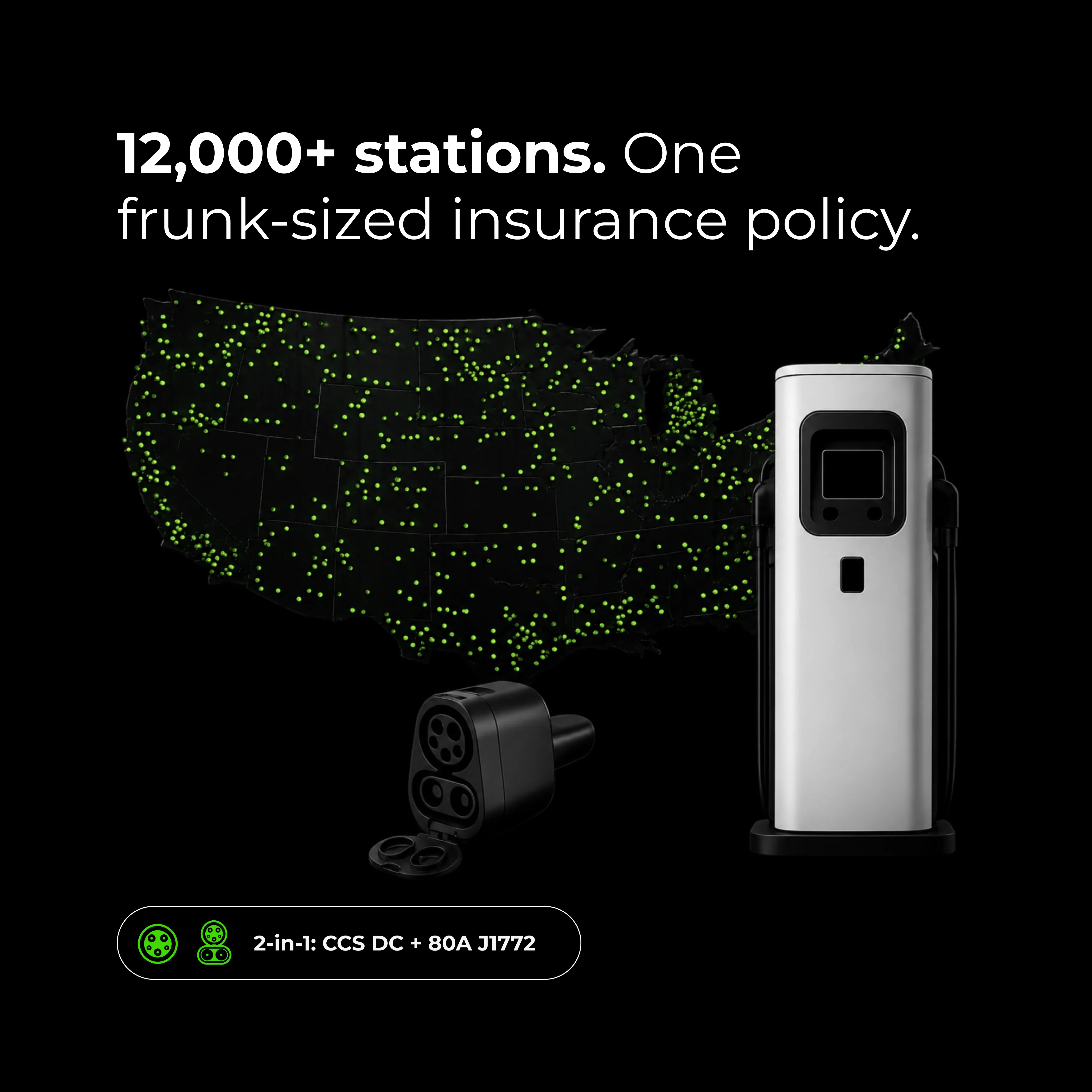
Non-Tesla networks are adding NACS cables, and that share is growing every quarter. But a charging network can't swap its hardware overnight. Put simply, there are roughly 12,000 fast-charging locations outside the Supercharger network, with more than 37,000 CCS1 connectors that a Tesla with an adapter can use.
When does a Tesla owner actually need an adapter?
Most of the time, Superchargers are all you need, and that is worth saying plainly. The adapter is for the moments when plans change:
- The Supercharger is down, full or too far. Reports put Supercharger uptime near 98% to 99%, but even a reliable network has broken stalls, holiday queues and gaps. A nearby Electrify America, EVgo or ChargePoint station turns into plan B instead of a problem.
- You're driving where Superchargers are thin. Federally funded NEVI stations line highway corridors, and many of them were built as CCS1. On some rural stretches the closest fast charger is not a Supercharger at all.
- The best charger is the one in front of you. Malls, hotels, dealerships and grocery stores often host third-party chargers. Plugging in while you shop or sleep beats a detour.
What about J1772 Level 2 charging?
Fast charging gets the headlines, but most charging happens slowly, where you park. J1772 is the standard plug for Level 2 AC charging. You'll find it on workplace chargers, apartment garages, hotel lots, city parking and the wall box in a friend's garage, and many of those have a J1772 handle and no Tesla cable.
A Tesla charges from these at whatever rate its onboard charger accepts, typically 7 to 11 kW depending on the model. That works out to roughly 25 to 40 miles of range per hour, which is plenty for an overnight stay or a workday. For drivers who never take road trips, this is where an adapter earns its place.
Does an adapter make my Tesla charge faster?
No. NACS is not faster than CCS. Speed depends on what your car can accept, what the station can deliver, and your battery's state of charge and temperature. The shape of the plug is not on that list.
A good adapter is a passive pass-through. Your car and the station negotiate power the same way they normally would, and the lower of the two limits wins. A CCS1 adapter can pass up to 250 kW, but most stations deliver less, so the station is almost always the limit. Pick stations by their rated power and your battery level, not by their plug.
How do I choose a safe Tesla charging adapter?
An adapter carries serious current for 20 to 40 minutes at a time, so build quality is the whole point. A cheap unit that overheats is worse than no adapter. Before you buy, check this list:
- UL 2252 or an equivalent certification, with the certificate available to read, not just a logo on the box.
- Explicit DC fast charging support. Some listings only cover Level 2 AC charging.
- A built-in thermal cutoff that stops charging before heat becomes damage.
- A sealed, locking connector that clicks in firmly, with a weather rating.
- A seller with a written warranty and a real return window.
- Good habits: end the session on the screen or in the app before you unplug, and retire any adapter that is cracked, burnt or loose.
How do I check that my Tesla supports CCS?
Most Teslas built in the last several years can charge at CCS1 stations through an adapter. Confirm yours in the car:
- Tap Controls, then Software.
- Open Additional Vehicle Information.
- Look for CCS Adapter Support. It reads “CCS charging and third-party NACS DC charging: enabled” when your car is ready.
If it shows as not enabled, you probably own an older car. Teslas built before about 2020 may need a one-time hardware retrofit from Tesla, and very early cars may not support CCS at all. Level 2 charging with a J1772 adapter does not need the retrofit.
Teslahubs pick
One adapter. Every plug.
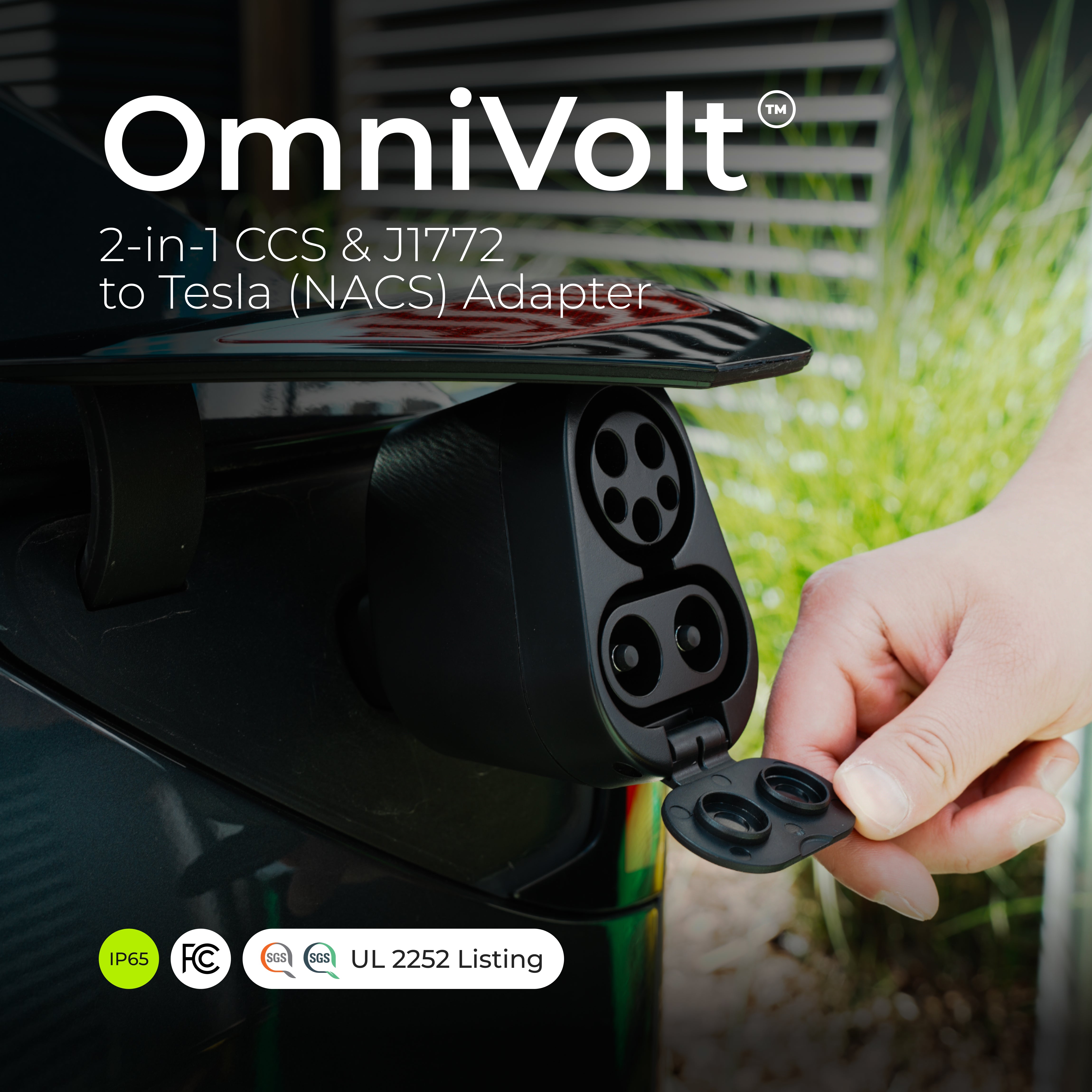
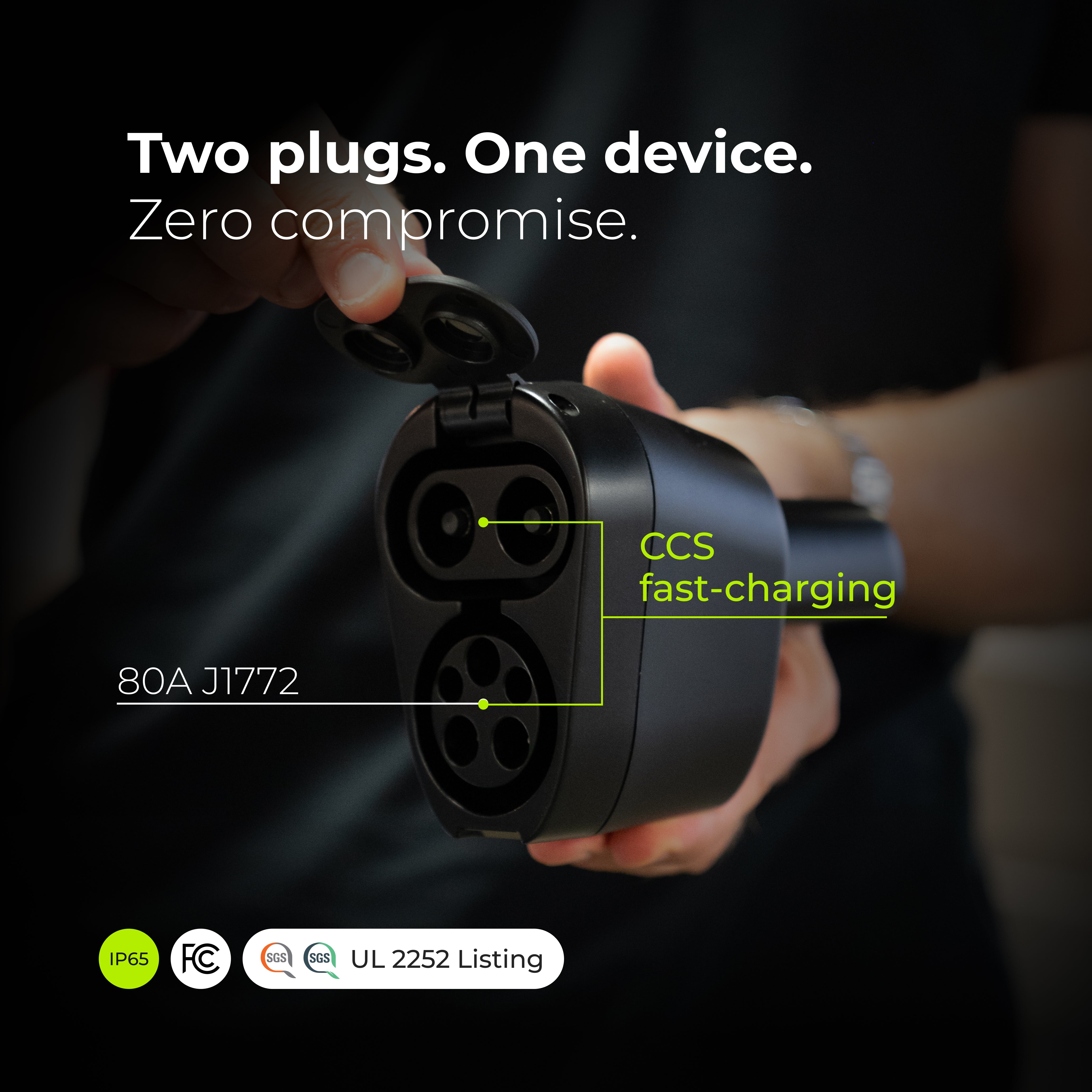
OmniVolt 2-in-1 opens CCS1 fast chargers up to 250 kW and J1772 Level 2 chargers from your Tesla's NACS port. UL 2252 Listed, with a thermal cutoff, a 3-year warranty and a 30-day money-back guarantee. $139.99.

FAQ
Does my Tesla need an adapter if it already has NACS?
How many CCS1 fast chargers are there in the U.S.?
Is NACS faster than CCS?
Will an adapter work with my older Tesla?
Do non-Tesla charging networks plan to add NACS plugs?
What should I look for when buying a Tesla charging adapter?
Sources: EVChargingStations: NACS, CCS1 and CHAdeMO (AFDC data, Sept 1, 2026) · EVChargingStations: largest DC networks, September 2026 · Paren: U.S. fast charging, Q3 2026 · Wikipedia: North American Charging Standard · Recharged: charging reliability
Teslahubs ist eine unabhängige Aftermarket-Marke. Wir stehen in keiner Verbindung zu Tesla, Inc., werden nicht von Tesla, Inc. gesponsert und werden von dieser nicht unterstützt. Tesla, Model S, Model 3, Model X, Model Y, Cybertruck, Autopilot und Full Self-Driving sind Marken von Tesla, Inc. Kommentare von Eigentümern wurden aus öffentlichen Beiträgen paraphrasiert, wie sie in den verlinkten Quellen angegeben sind.
← Weitere Nachrichten für Tesla-Besitzer