
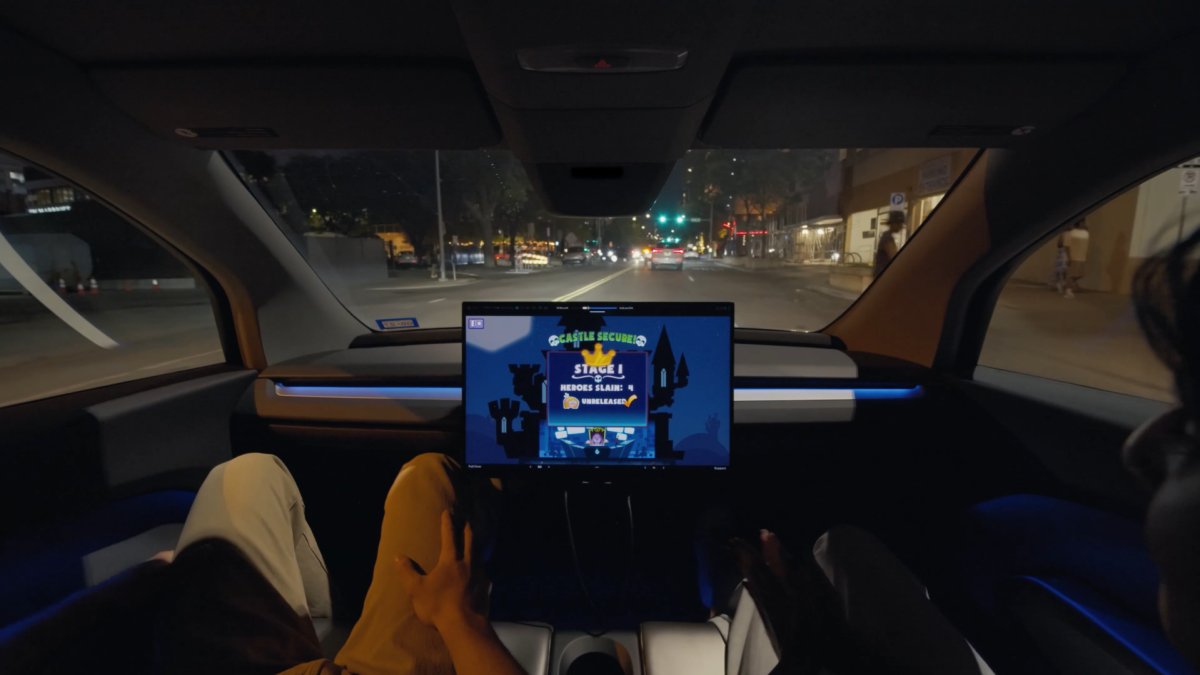

In einer vollautonomen Kabine ohne Lenkrad, Pedale oder manuelle Bedienelemente kann die Fahrtzeit vollständig der Unterhaltung gewidmet werden. Tesla legt bei seinem speziell entwickelten Cybercab einen Schwerpunkt auf Infotainment, und Elon Musk sagt, dass Passagiere bald in der Lage sein könnten, Gaming-Hardware direkt mit dem Fahrzeug zu verbinden.
Auf X bewarb Tesla die Medienfunktionen des Innenraums, darunter einen 22-Zoll-Touchscreen, die Unterstützung für Medien-Streaming- und Gaming-Apps sowie eine kommende Starlink-Konnektivität. In einer direkten Antwort erklärte @elonmusk: „Sie werden in der Lage sein, Ihre PlayStation oder Xbox anzuschließen.“
Der Kommentar erfolgte, als das Cybercab Anfang dieser Woche begann, kommerzielle Fahrten in Austin anzubieten. Erste Mitfahrer und Teilnehmer der Auftaktveranstaltung am Donnerstag lobten den geräumigen Innenraum, bei dem das 22-Zoll-Display als zentraler Blickfang dient.
Vollwertige Konsolen und Handheld-PCs oder nur Controller?
Musks Wortwahl lässt Raum für Interpretationen. Erste Mitfahrer wie @BLKMDL3 haben bereits gezeigt, dass kabelgebundene und kabellose Controller mit den USB-C-Anschlüssen der Kabine verbunden werden können, um integrierte Tesla-Arcade-Titel zu spielen. Da eine Controller-Unterstützung bereits existiert, deutet die Aussage, Nutzer „werden in der Lage sein“, auf eine potenzielle Hardware- oder Videoeingabefunktion hin.
Die Frage ist, ob Musk das Anschließen eines PlayStation- oder Xbox-Controllers meinte oder ob ein echter HDMI-Videoeingang geplant ist. Es ist unwahrscheinlich, dass viele Mitfahrer eine komplette Heimkonsole in ein Robotaxi mitnehmen – obwohl es sicher ein Flex wäre, im Dezember GTA VI von einem Cybercab-Sitz aus zu starten.
Ein externer Videoeingang wäre für tragbare Geräte unmittelbar sinnvoll. Handheld-PCs wie das Steam Deck und der ASUS ROG Ally, die Nintendo Switch sowie alltägliche Arbeitslaptops sind unter Pendlern weit verbreitet. Wenn Tesla einen dedizierten HDMI-Anschluss hinzufügt oder einen DisplayPort-Videoeingang über USB-C ermöglicht, könnten Passagiere das 22-Zoll-Display als externen Monitor zum Spielen, Streamen persönlicher Medien oder Erledigen von Büroarbeiten nutzen. Auch wenn die anfängliche Nutzung begrenzt sein mag, wäre dies eine zukunftsweisende Ergänzung mit wachsender mobiler Produktivität.
Gaming mit niedriger Latenz via Satellit
Die Verbindung externer Hardware würde perfekt zur Konnektivitäts-Roadmap von Tesla passen. Da Starlink-V5-Antennen der nächsten Generation direkt in die Cybercabs integriert werden, können die Fahrzeuge auf satellitengestütztes Internet mit niedriger Latenz zugreifen.

Wenn es Passagieren gestattet ist, ihre eigenen Geräte mit der bordeigenen Starlink-Verbindung des Fahrzeugs zu koppeln, könnte dies nahtloses Multiplayer-Gaming und eine schnelle Cloud-Synchronisation ohne Funklöcher oder die Unzuverlässigkeit von Mobilfunknetzen ermöglichen.
Ob Tesla nun einen vollwertigen HDMI-Video-Feed liefert oder lediglich das Koppeln von Controllern vereinfacht: Die Weiterentwicklung des Cybercabs zu einem mobilen Unterhaltungszentrum unterstreicht, wie freihändiges Reisen die Zeit unterwegs neu definiert.


Teilen:
Versionshinweise 2026.27.5
Tesla FSD (Supervised) in Slowenien zugelassen, Start in Kürze