
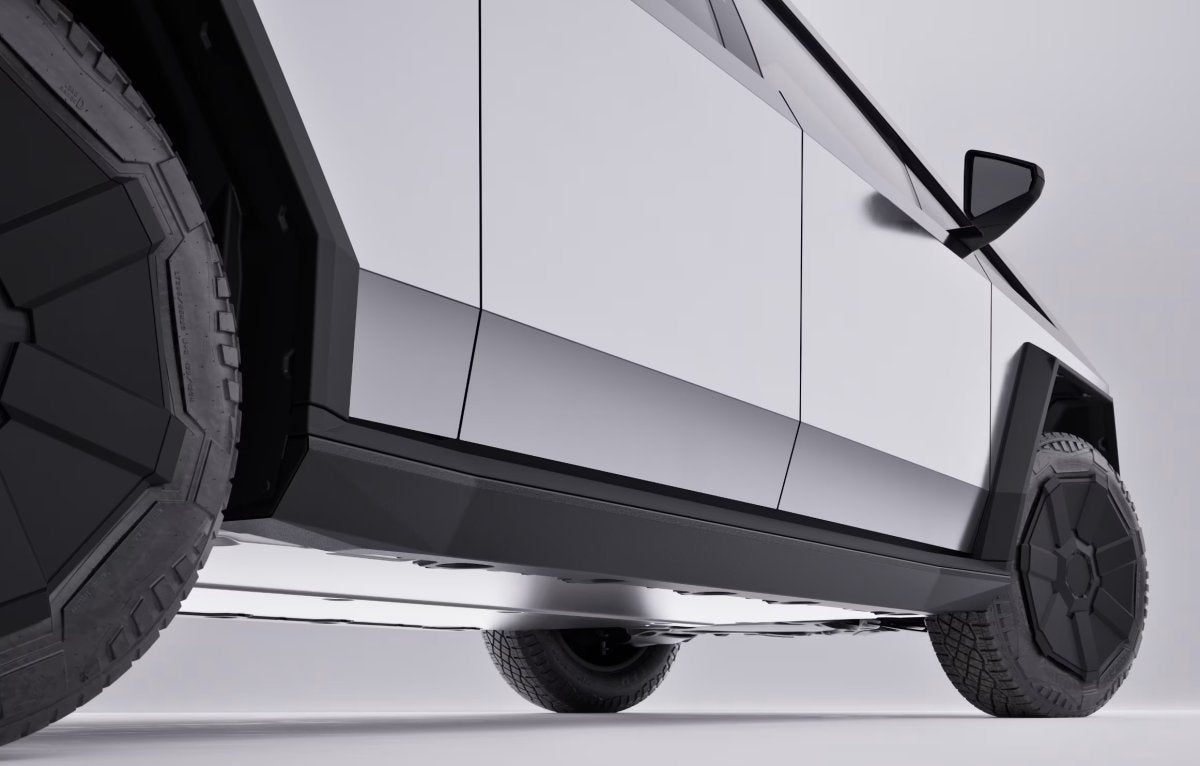
Musk: Cybertruck Profitable; Order Rate Exceeds Output, 9% Price Hike

Elon Musk clarified that Tesla is not discontinuing the Cybertruck because it loses money. “This is not a case of Cybertruck being unprofitable, as has been misreported by legacy media,” Musk wrote on X. He added that the opportunity cost of the vehicle’s complexity “is vastly outweighed by the value of incremental Cybercab production.”
More Orders Than Tesla Can Build
Musk said “the Cybertruck order rate far exceeds our production rate.” Tesla plans to build as many units as possible before the line shuts down in about eight months and “will have to return deposits for a lot of people.”

A few days earlier, he said Tesla would add an extra Cybertruck shift to work through the backlog before the line is torn down around June or July. Tesla also recently raised Cybertruck prices by up to 9% and paused new orders for the base Dual Motor AWD trim.
Why Not Just Build Another Factory?
Responding to a question on X from Owen Sparks (@OwenSparks) about simply adding factory space, Musk replied that building a high-volume factory is extremely difficult, noting that “prototypes are trivial by comparison.”
He also explained that Tesla has a limited number of skilled engineers, and keeping the Cybertruck going would tie up people, factory floor space, and equipment that could be scaling Cybercab production instead. Tesla has previously built plants in California, Nevada, Texas, Shanghai, and Berlin. The larger consideration is whether a new factory or a separate line would be justified for a low-volume vehicle like the Cybertruck.

Sales Tell Part of the Story
Despite today’s backlog, recent Cybertruck sales have been modest. In Q3 2026, Tesla delivered 8,295 vehicles in its “Other Models” category, compared to 478,237 Model 3 and Model Y vehicles. That category now includes the Cybertruck, the Semi, and any remaining Model S and Model X inventory, and it was down 48% from 15,933 a year earlier.
Much of the current backlog likely comes from Dual Motor AWD buyers who placed orders at $59,990 back in February, before the price increase.
As a result, the Cybertruck may be profitable, but at roughly a few thousand units per quarter, it does not justify the factory space Tesla wants to allocate to the Cybercab, which the company expects to build more quickly and at much higher volumes. Existing Cybertruck owners will continue to receive parts and service after production ends. For customers still waiting on an order, the next eight months will determine whether they receive a truck or a refund.






Teilen:
Tesla Ends Premium AWD Orders, Raises Cyberbeast $7,500 to $109,990
Tesla App 4.62.5: Remove Vehicle Keys, FSD Referrals, Key Reset