Behind the product · June 2026
6 months. One problem.The window visor your Tesla deserves.
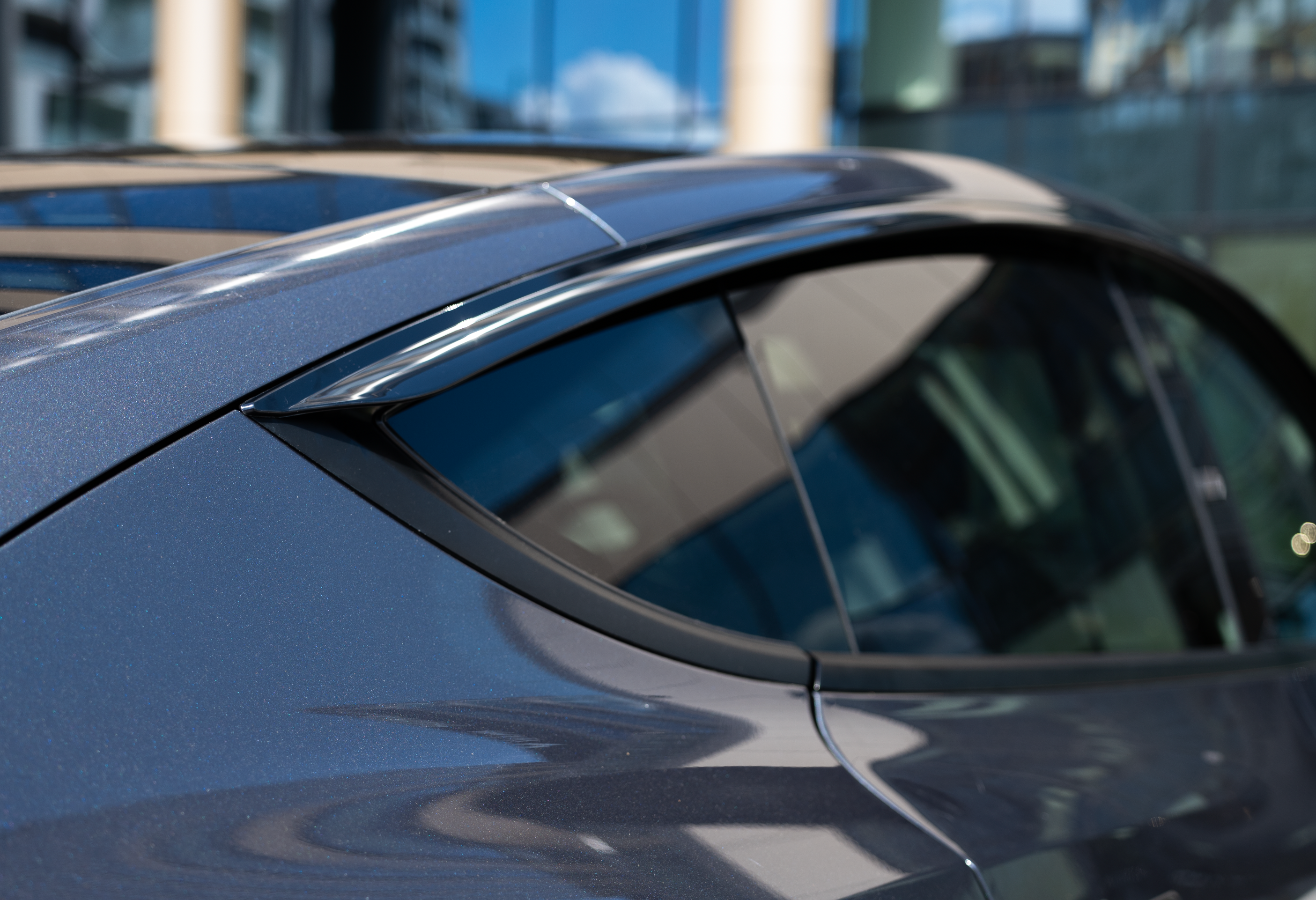
Tens of thousands of Tesla owners deal with the same daily frustration — wind blast and rain the moment you crack a window. We spent six months building a solution that actually looks like it belongs on the car.
We started by listening
Before we drew a single line, we spent weeks reading — Tesla forums, Model Y subreddits, owner Facebook groups. The same frustration showed up everywhere, written differently each time but always the same core problem: you buy a $50,000 car, and you can't open the window on the highway without it sounding like a wind tunnel. And the moment it rains in California? Windows go up, and they stay up.
“Wind noise is too much on the highway. Sound feels like as if a window was left open.”
— Tesla owner, Tesla Forums
“I would think a $40k car would be quieter around the windows than my car is.”
— Tesla owner, Tesla Owners Online
“Air leaking drive side, causing noise. Not yet resolved.”
— Consumer Reports Tesla Model Y owner survey
This is a design reality of frameless windows — they create an incredibly clean look. But that same frameless profile means there's nothing to deflect wind or rain when the window is open. Every owner learns this the first time they try to get fresh air on I-5.
What we set out to solve
01
Rain in the cabin.
Cracking a window in light rain means wet seats, wet door panels, and a scramble to close up at every stoplight. AeroShield deflects water away from the window opening entirely — you can keep the window cracked in a drizzle without thinking about it.
02
Wind blast above 40mph.
The turbulence you feel when a window is open on the highway is caused by air hitting the window edge directly. A properly profiled visor redirects airflow over the gap — you get ventilation without the roar.
03
Fogging in cold weather.
Cracking a window to clear condensation on a cold morning means letting in cold air and often rain. With AeroShield, that option is always available without the tradeoff.
04
A product that looks wrong on the car.
This was non-negotiable for us. Tesla owners are particular about their cars. Whatever we built had to look considered — not like something zip-tied onto the door frame.
This is a design reality of frameless windows — they create an incredibly clean look. But that same frameless profile means there's nothing to deflect wind or rain when the window is open. Every owner learns this the first time they try to get fresh air on I-5.

Six months of actual development
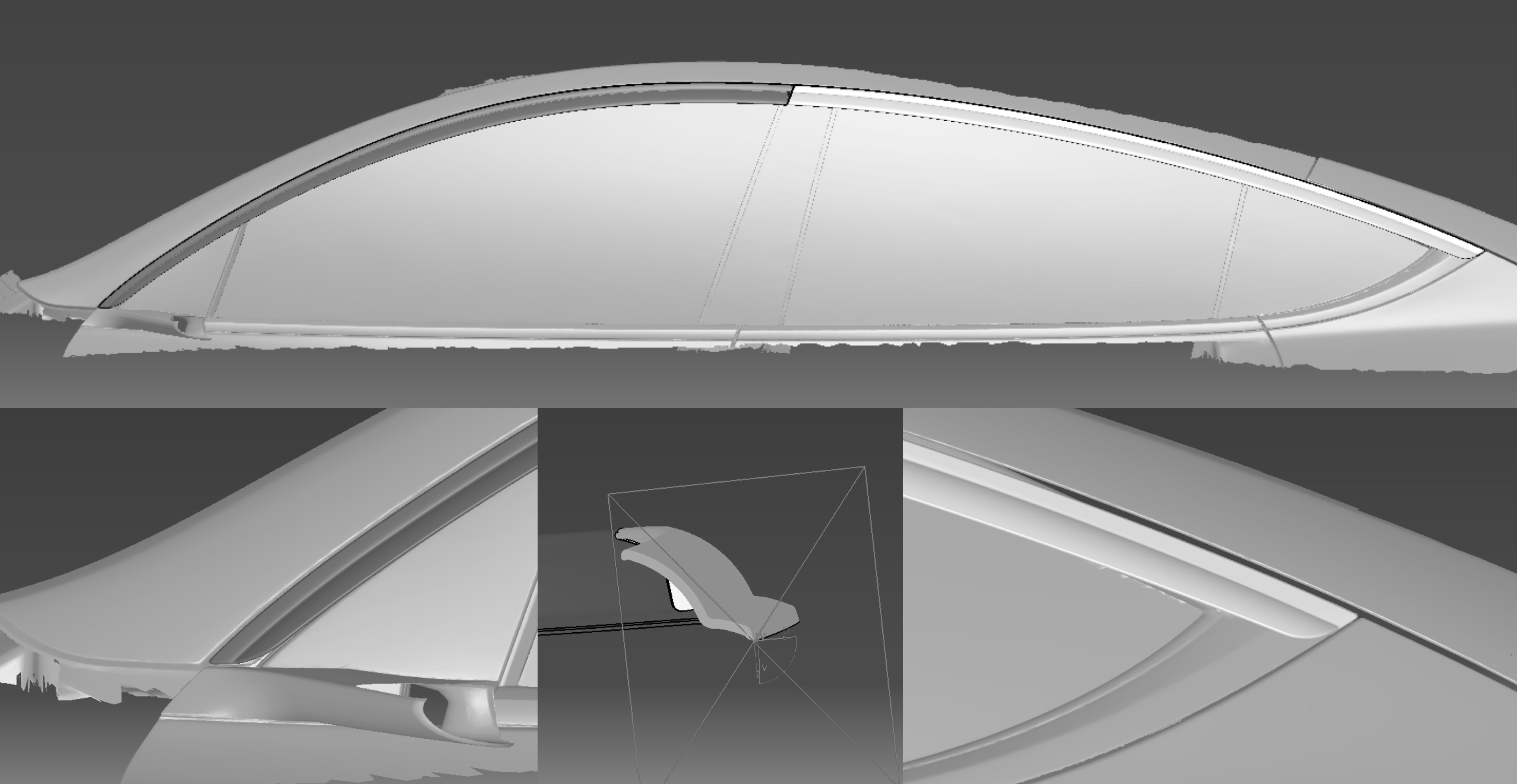
We started with door measurements pulled directly from Model 3 and Model Y vehicles — not specs from a spreadsheet. The window channel geometry of these cars is specific, and the door curvature at the A-pillar is different from any other vehicle on the road. That's where every generic product fails: they assume a universal profile fits. It doesn't.
The AeroShield profile was developed around the actual Tesla door geometry. The result is a fit that sits flush at the front and rear of each door — no gaps, no flex points, no separation where the door frame curves away.
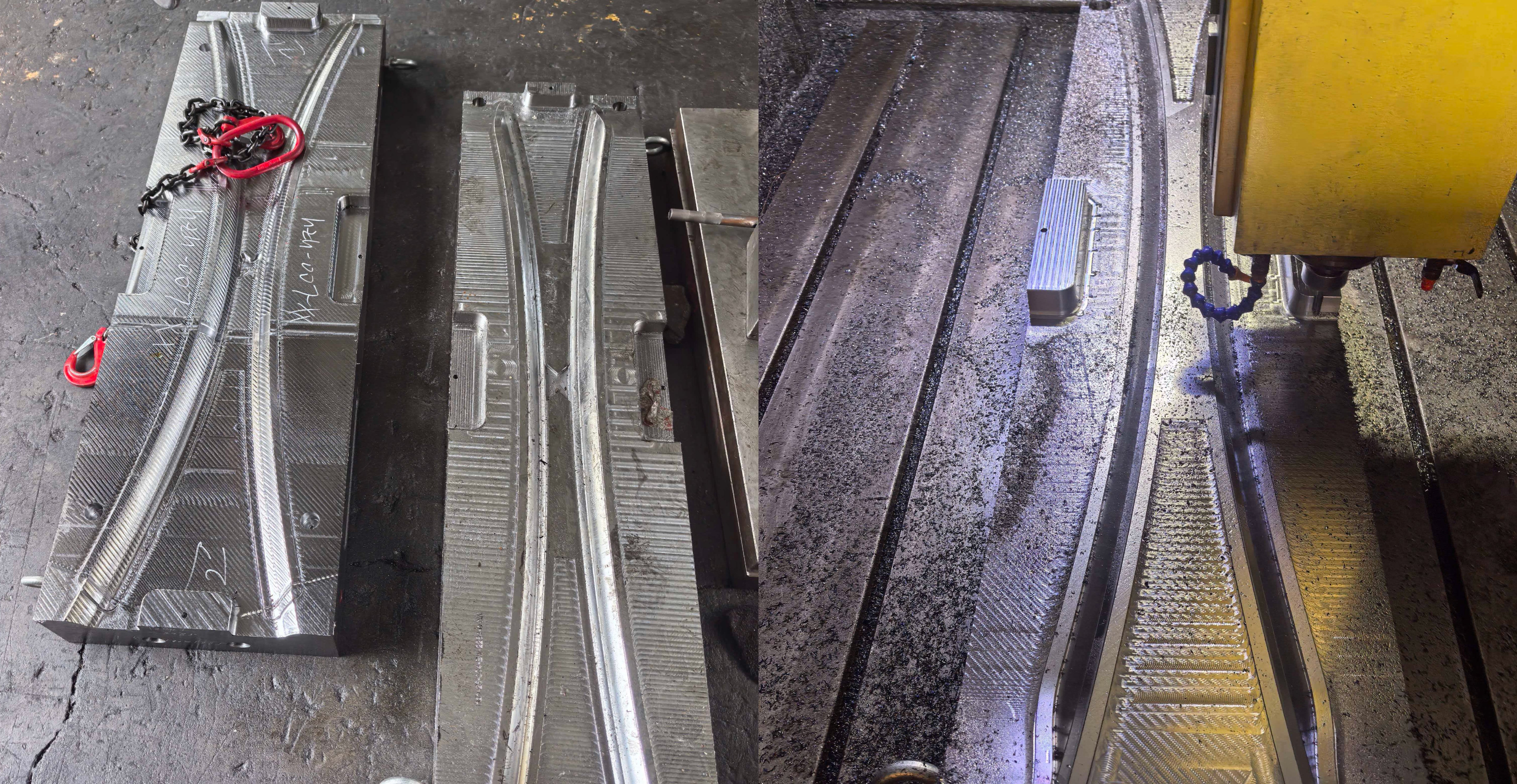
The part itself is a two-piece design. Front and rear sections for each door. Clean, easy to position correctly, and each piece is shaped to follow the exact window channel line of its respective door opening. Installation is straightforward: clean the surface, position, press. No tools, no drilling, no clips to force into a channel that wasn't built for them.
Development time
6 months
Design
2-piece per door
Install time
Under 5 minutes
First batch
500 units / model
The material: AeroCore™ Recycled Polymer
We didn't want to build this out of standard polycarbonate and call it a day. After testing several material options, we settled on AeroCore™ — a high-impact recycled polymer compound developed for automotive structural applications. It's the same material category used in exterior body components on performance vehicles: dimensionally stable under heat, UV-resistant, and impact-rated far beyond anything you'd need from a window visor.
The recycled content matters to us. Tesla owners chose an EV for a reason. AeroCore™ uses post-industrial recycled feedstock without any compromise on mechanical performance — it's actually stronger than virgin-grade standard automotive plastics. And because it's processed for optical consistency, the finish is uniform across every unit. No visible grain, no surface variation.
It won't yellow in a California summer. It won't craze after two years of UV exposure. It will outlast the 3M adhesive that holds it to your door — which is saying something, because that adhesive is rated for outdoor automotive use and tested across temperature cycles from desert heat to winter cold.
Designed for Model 3 and Model Y. Nothing else.
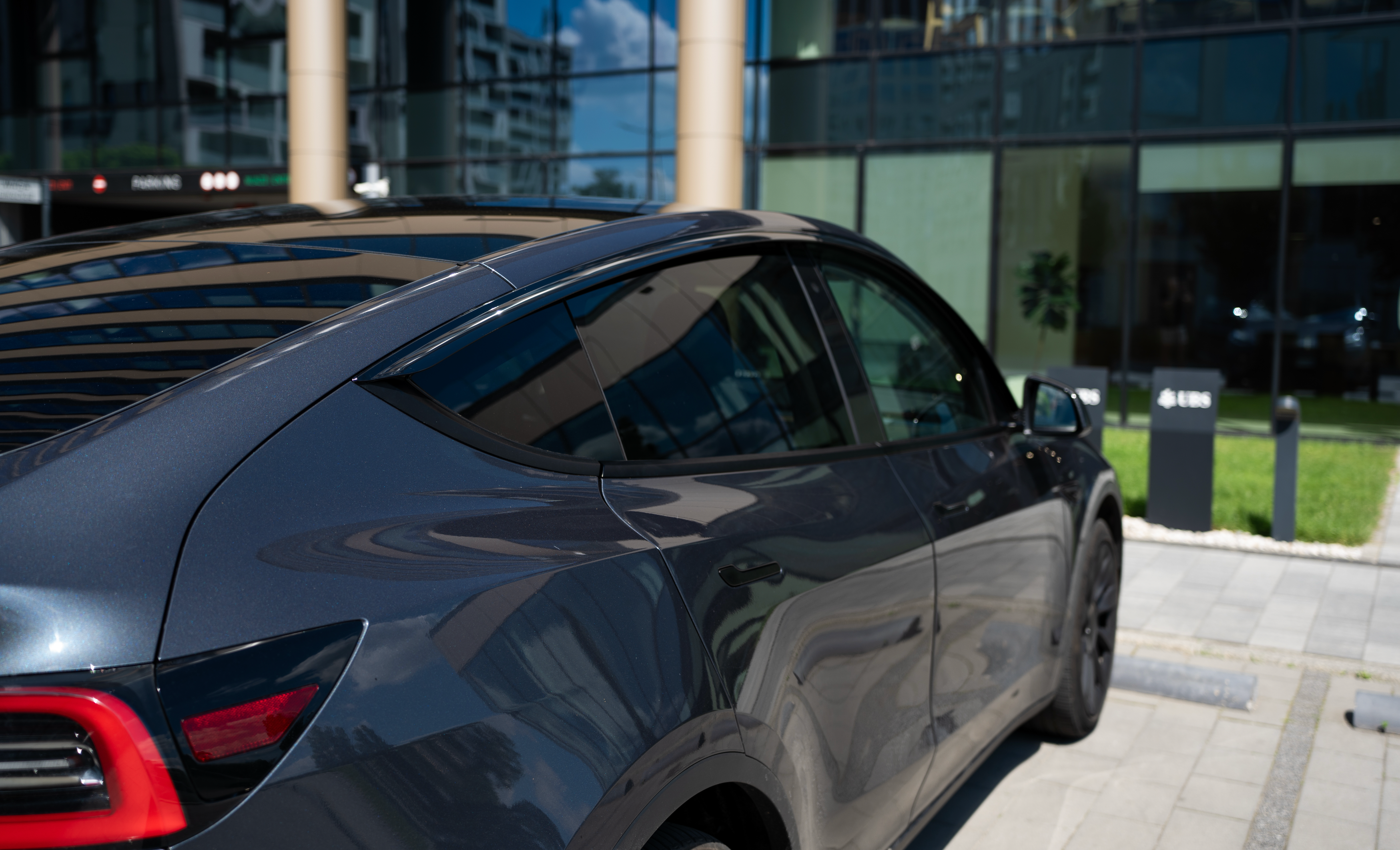
Most accessories in this category are designed to fit as many cars as possible — that's how you scale a business when you're building a universal product. We took the opposite approach. AeroShield exists only for Model 3 (2017–2025) and Model Y (2020–2026, including Juniper). The profile, the mounting geometry, the curvature — everything is specific to these two vehicles.
The Juniper refresh of the Model Y changed the door trim profile in a way that breaks most older visors. We templated AeroShield against both generations from the start. If you have a 2024 or 2025 Juniper, it fits. If you have a 2020 Model Y, it fits. Same part, same flush result.
We also paid attention to the aesthetic. The matte finish was deliberate — it matches the black trim detailing that Tesla uses throughout the exterior. When it's installed, AeroShield reads as part of the car's design language, not an addition to it.
What early owners said

Teslahubs Community — Early Access
500 units. That's the first run. Get AeroShield before it sells out.
Available this Saturday. Teslahubs community gets first access — before we open to general public.