
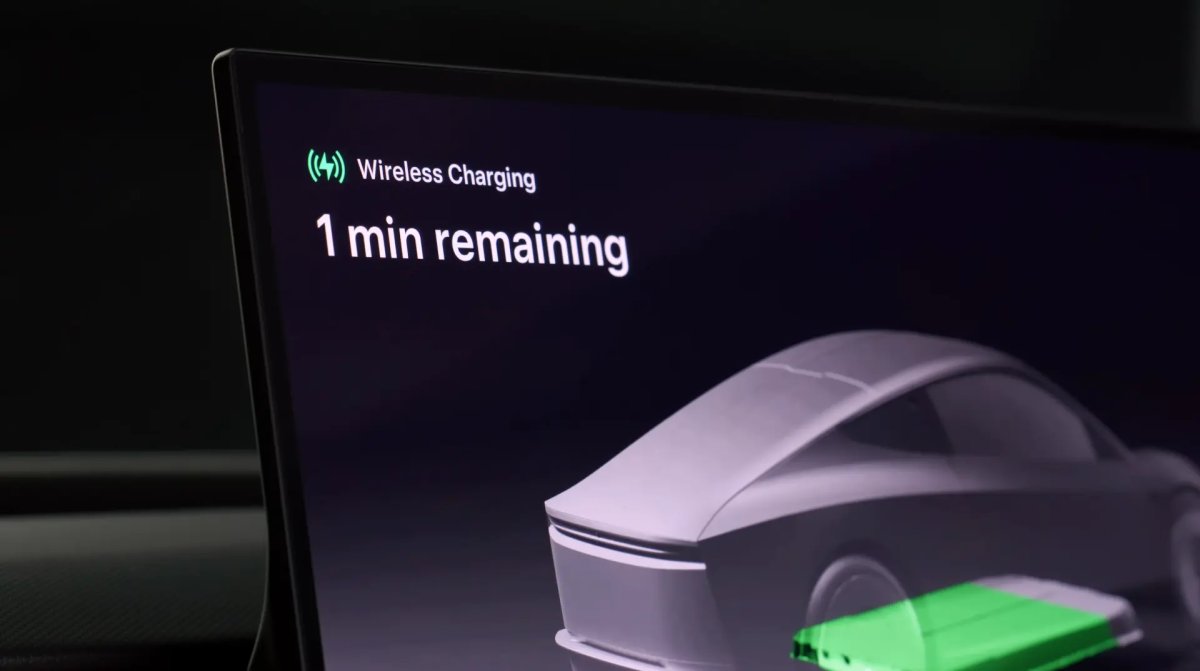

The Federal Communications Commission (FCC) has granted Tesla a waiver to use Ultra-Wideband (UWB) radio technology for the Cybercab’s planned wireless charging system, moving the project a step closer to reality.
Ordinarily, this kind of radio technology is intended for handheld use and cannot be permanently installed on outdoor equipment. Because Tesla’s wireless charging pads will be fixed to the ground and likely installed in driveways or charging hubs, the company required a special "yes" from the government to proceed.
How Wireless Charging Actually Works
Tesla’s longer-term aim for the Cybercab is a fully hands-off, wireless fleet that drops the NACS charging port and relies solely on inductive charging—similar to placing a smartphone on a charging pad. For effective energy transfer, the vehicle must be precisely positioned over the ground pad.
Here, UWB provides the necessary accuracy. According to the FCC filing, the vehicle initially uses Bluetooth to "find" the charging pad. As the Cybercab approaches, onboard UWB transceivers determine the car’s position with high precision. Once perfectly centered, wireless power transfer starts.
The FCC approved the waiver because the UWB signal operates at very low power and is only active briefly while the vehicle parks. After the car is resting on the pad, the vehicle’s metal body blocks the signal, minimizing the chance of interference with nearby devices.
Tesla’s First True Robotaxi
The approval arrives just days after the first production Cybercab rolled off the line at Gigafactory Texas. The two-seat, all-electric autonomous vehicle is positioned as the core of Tesla’s Robotaxi network.
The concept calls for a fleet that can drive, clean, and charge itself without human intervention. Tesla has also confirmed the Cybercab will ship without a steering wheel, pedals, or side mirrors. It’s a "vision-only" machine that will depend on the Full Self-Driving system.
What’s Next for the Cybercab?
With the first unit on the floor at Giga Texas, Tesla is expected to begin a gradual production ramp. The company has tested prototypes in cities like Austin and in harsh winter conditions in Buffalo, and volume production isn’t slated to truly begin until April.
Tesla maintains that the Cybercab will ultimately use inductive wireless charging. However, recent validation units have been spotted with a conventional charge port. Behind a small, manual drop-down door in the rear bumper corner, there’s a NACS port that current test builds use for charging.
If Tesla holds to its timeline, these steering-wheel-less taxis could begin appearing in the Robotaxi fleet in about two months. Securing the FCC waiver indicates the company is advancing the hardware and supporting infrastructure in parallel.


Share:
How to Get Your Tesla on FSD to Take the Path You Want
Ford’s New $30K EV Truck is a Tesla Cybertruck Underneath