

Tesla typically develops core technology in-house, but its latest step signals a different approach in robotics and AI. In its latest 10-Q filing, the company says it has agreed to acquire an unnamed AI hardware firm for up to $2 billion.
The transaction is primarily composed of Tesla common stock and equity awards. Approximately $1.8 billion of the total is "subject to certain service conditions and/or performance milestones dependent on the successful deployment of the company's technology." While the filing confirms the size of the deal, neither Tesla nor the SEC documents disclose the company’s name.
An uncommon strategic shift
Acquisitions are unusual for Tesla. The company emphasizes vertical integration and often builds its own systems, including AI chip manufacturing plans under the TERAFAB project. To date, Tesla has acquired only roughly 10 companies, typically centered on battery technology or manufacturing automation.
This suggests the target holds intellectual property that Tesla and its partners do not already possess. Tesla already maintains a close working relationship with Elon Musk’s xAI — which was recently acquired by SpaceX — through the TERAFAB project. Tesla also invested $2 billion into SpaceX to secure its position in that ecosystem. If Tesla is committing another $2 billion to a new entrant, the focus likely involves specialized sensors or low-power processors crucial for mobile AI.
Potential link to Optimus
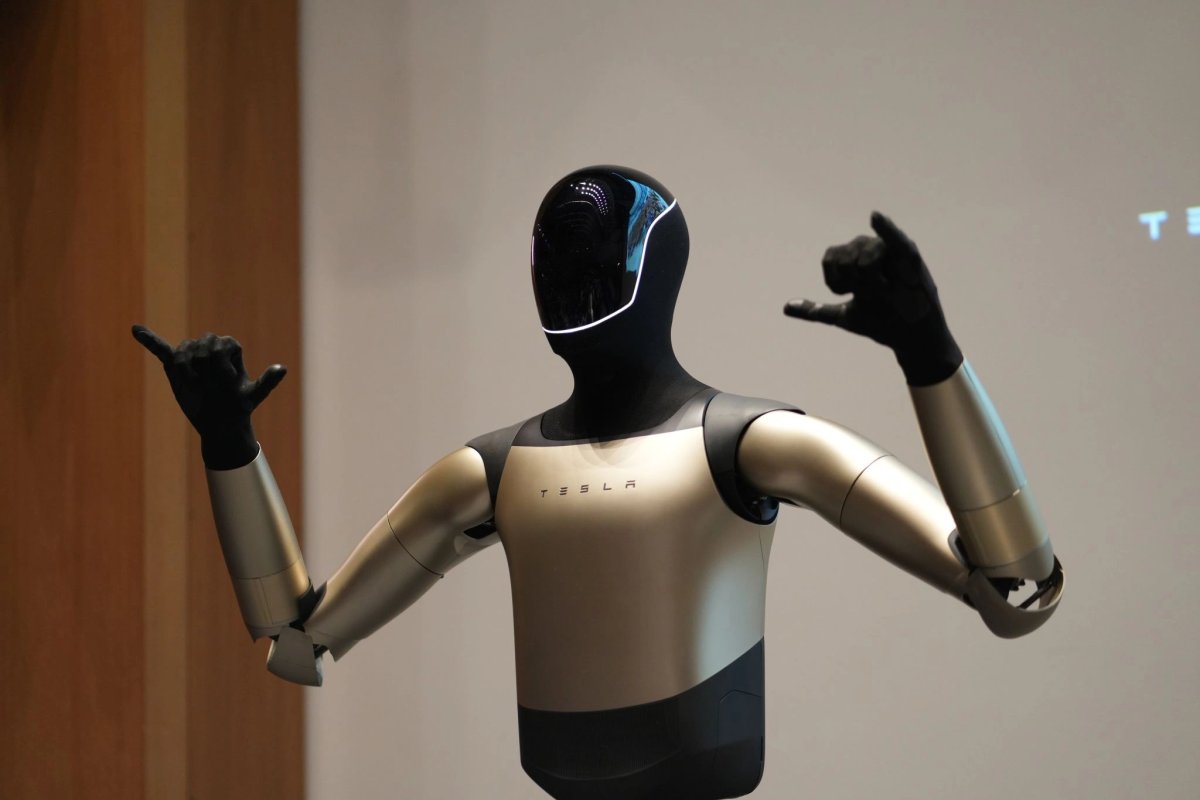
Speculation points to the Optimus humanoid robot. Tesla plans to unveil a production-ready Optimus later this year, and the hardware to make a robot walk, balance, and interact with its environment differs substantially from what a vehicle requires.
During the Q1 2026 Earnings Call earlier this week, Musk said the company is raising its capital expenditure outlook for the year from $20 billion to $25 billion. It is highly likely this acquisition represents a major portion of that spending. Tesla appears to be seeking AI silicon capable of real-time spatial reasoning at the edge, a key requirement for robots intended to work in factories and homes.
Vertical integration at scale
By bringing the hardware team in-house, Tesla is ensuring its future robots and vehicles aren’t dependent on outside suppliers such as Nvidia or Intel for specialized tasks. The move aligns with the broader Musk ecosystem, where Tesla, SpaceX, and xAI share data and engineering talent to accelerate development.
As the deal progresses toward closing, attention will focus on the company’s identity. Whether it specializes in computer vision or leads in neural processing units, the purchase underscores Tesla’s evolution beyond automobiles and into AI.


Share:
Tesla app update 4.56.0: Virtual Queue for Superchargers and earlier service appointment notifications
Tesla Confirms Cybercab Has No Production Cap as Ramp Begins