
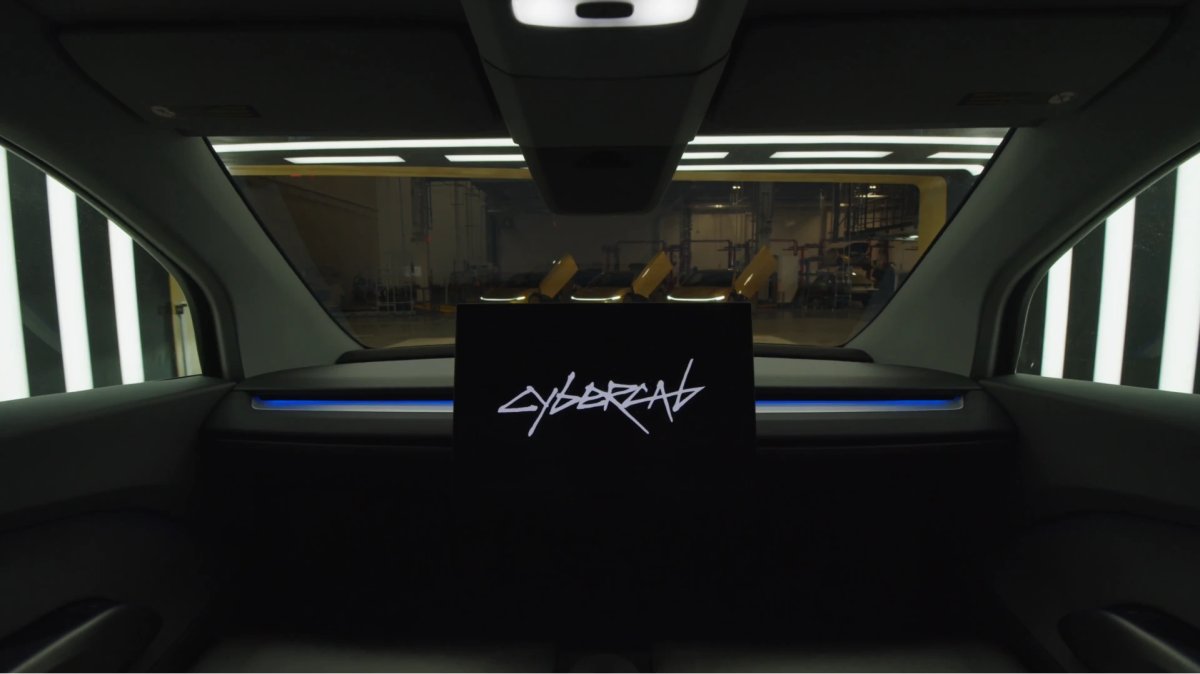

After months of assembling modified test mules, Tesla says the control‑free Cybercab is now in mass production at Gigafactory Texas. In a promotional video shared on X, the company showed a fleet of vehicles without steering wheels coming off the line and autonomously exiting the factory onto public roads.
"Cybercab has started production," Elon Musk added. Days earlier, footage from Giga Texas showed over a dozen newly manufactured units in the outbound lot. These vehicles match the promised minimalist interior: no driver controls, no pedals, and no side mirrors.
The 2,500-Vehicle Question
A key regulatory issue has been whether federal limits would constrain rollout. The U.S. National Highway Traffic Safety Administration (NHTSA) currently has a 2,500-vehicle-per-year, per-manufacturer cap on deploying autonomous vehicles that lack traditional controls.
Tesla’s Vice President of Vehicle Engineering, Lars Moravy, addressed this on X. Asked if the 2,500-vehicle cap applies to Cybercab, Moravy replied: "No."
Instead of seeking a one-off exemption, it appears Tesla is self‑certifying Cybercab under the Federal Motor Vehicle Safety Standards (FMVSS). An FMVSS sticker was previously spotted on a production unit, suggesting Tesla has a path to meet safety standards without a traditional steering wheel, enabling output to scale with factory capacity.
Ramping Up the Robotaxi Network
The timing aligns with the company’s recent expansion of its Robotaxi service to Dallas and Houston, offering fully unsupervised rides for the first time. That service currently uses modified Model Ys, and with Cybercab now in volume production, those purpose‑built vehicles can join the network.
The company has said it would add a steering wheel and pedals if regulations required it, but Moravy’s "No" indicates Plan A is proceeding. Recent footage of the car’s frunk also showed specialized hardware, including a massive fluid reservoir, underscoring the dedicated nature of the autonomous platform.
By mass‑producing a vehicle that cannot be driven by a human, the company is committing to its Unsupervised Full Self‑Driving software and moving beyond the "testing" phase.
With production ramping and a path through federal requirements signaled by self‑certification, Cybercab shifts from a "someday" project to an active program and is positioned as central to the company’s future business model.


Share:
Tesla to Acquire AI Hardware Company for up to $2 Billion
SpaceX Files FCC Application for Next-Gen Starlink Gateway