
Tesla Starts Testing Steering Wheel-less Cybercabs in Austin

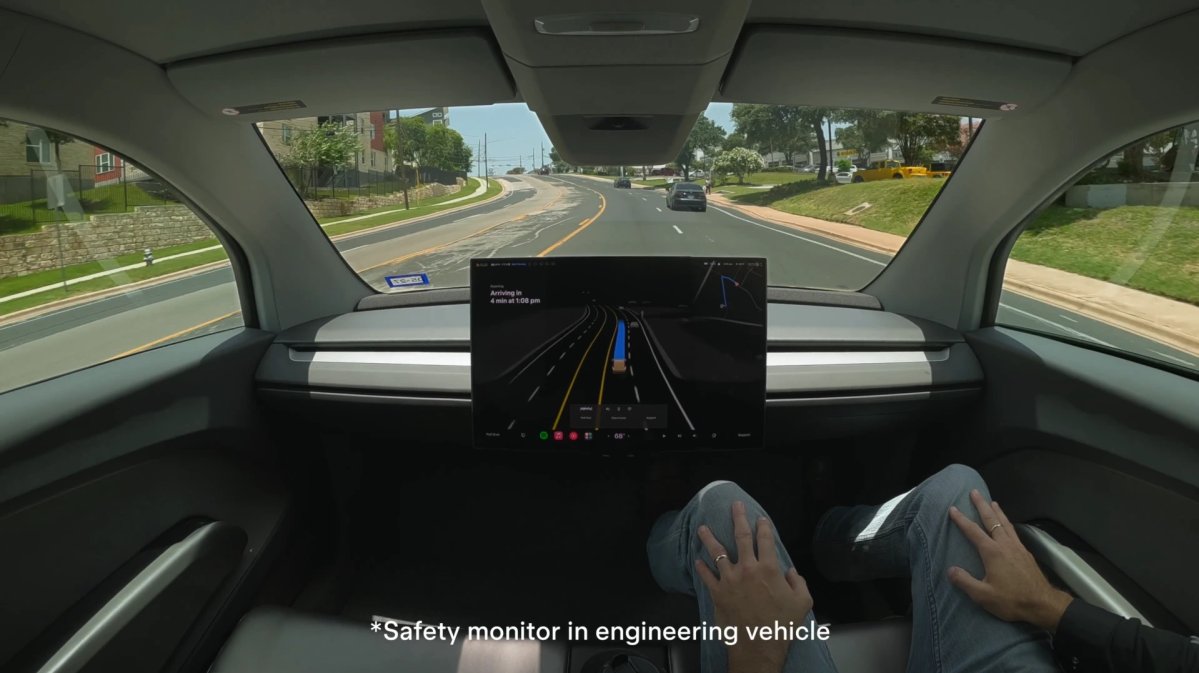
Tesla shared a significant update on social media, showing a production Cybercab driving itself on public streets. The official @Tesla account on X said the company has begun the first engineering tests in Austin of self-driven Cybercab vehicles that have no steering wheels, pedals, or other human controls. The video shows the car handling routine city traffic with no human input.
Cybercab Engineering Tests
Validation on public roads is underway in Austin, close to the production lines at Gigafactory Texas. Tesla officially kicked off Cybercab mass production back in April and has been expanding its manufacturing lines since then. For these early runs, a safety monitor rides in one of the two passenger seats while the vehicle drives.
Having a supervisor on board is common during testing, but it is not sustainable for this platform. When the Robotaxi service launched last summer with retrofitted Model Ys, an employee in the front passenger seat served as an interim safety measure. Because the Cybercab seats two, keeping a safety monitor inside would permanently halve passenger capacity. To scale a design with no steering wheel or pedals, Tesla needs to complete this phase, remove the need for an in-car monitor, and obtain approvals to deploy Cybercabs across the Robotaxi network.
What's On the Screen
With no traditional driver controls, the central touchscreen manages rider interactions. The interface differs from consumer Teslas: navigation displays a gold Cybercab with the familiar blue Full Self-Driving path outlining the route. The screen indicates the car is in driverless 'Autonomous Mode' with blue "Self-Driving" text in the upper-left notification area, and the left side also shows an estimated time of arrival.

Along the bottom, standard media and streaming controls appear, plus a new "Pull Over" button on the left for emergency stops and a "Support" button on the right to contact Tesla’s Robotaxi Support. When the vehicle comes to a complete stop, these are replaced by "Open Door" buttons for each side.
Prepping for a Public Launch
Seeing fully driverless production vehicles in validation suggests a consumer launch is getting closer. As noted by @scotsrule08 on X, the Texas Department of Public Safety has added the Cybercab to its Connected Autonomous Vehicles database. The Cybercab joins the Model Y on the list, which has been providing fully autonomous rides in Austin, Houston, and Dallas.
The regulatory picture is improving. Tesla had previously mentioned a willingness to add a steering wheel and pedals as a backup plan if required by regulators, but it appears to be pursuing the wheel-less design. Progress accelerated after NHTSA dropped its brake pedal requirement for autonomous vehicles, and Tesla self-certified its FSD-driven cars as SAE Level 4 autonomy-compliant under a new Texas law. Tesla’s Cybercab First Responder Interaction Plan outlines public operations, and the manual states the vehicle operates in an SAE Level 4 'Autonomous Mode.'

Austin, which serves as both the manufacturing and testing hub for the Cybercab and the home base for the Robotaxi service, is poised to host the first public rides once validation without a steering wheel is completed. Beyond Austin, a recent photo on Reddit showed a fleet of over 70 production Cybercabs staged in Dallas’s medical district, indicating a multi-city expansion is likely to follow.


Share:
Tesla Confirms FSD v14 Lite International Release
Inside Tesla Cybercab's Level 4 'Autonomous Mode'