
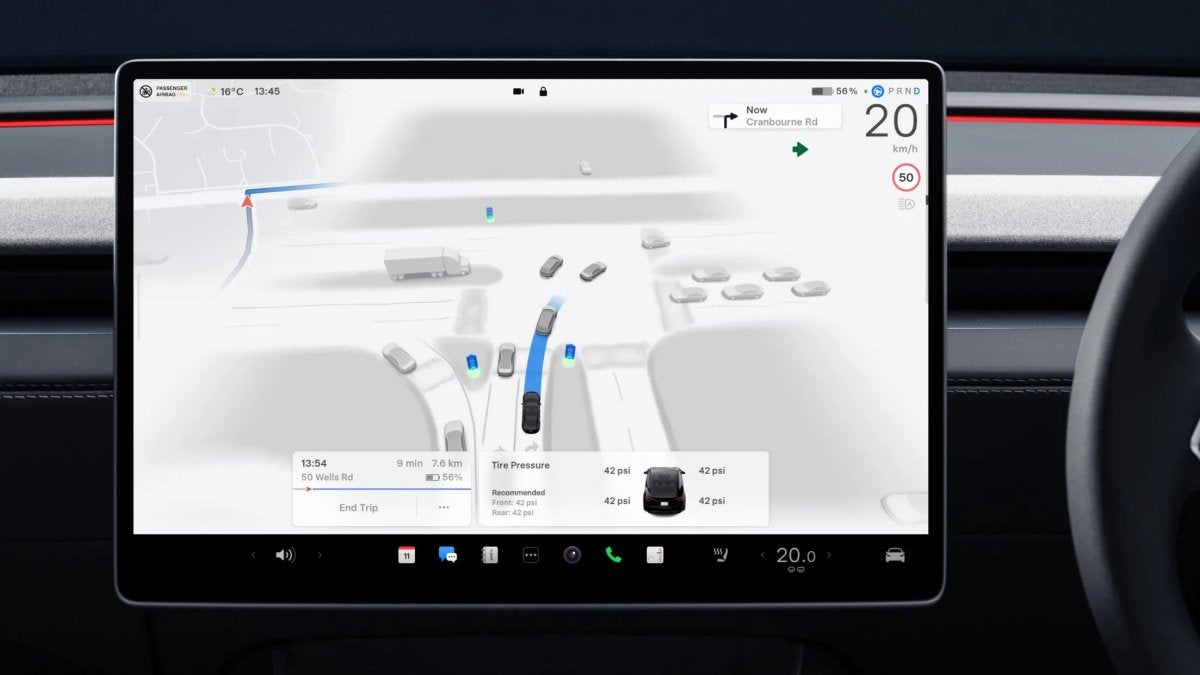
Tesla Starts Hiring FSD Testers in China Ahead of V14 Launch

Tesla is accelerating the global rollout of its driver-assistance software and is now focusing on its largest vehicle market. The company has launched a broad hiring effort in China for Autopilot and autonomous driving test engineers.
According to Tesla's official Chinese job portal, the primary engineering roles are based in Shanghai’s Lingang district, home to Gigafactory Shanghai. The listings also offer flexible positions in Beijing, Guangzhou, Shenzhen, Tianjin, Suzhou, Chongqing, Chengdu, and Wuhan. This expansion follows remarks by CFO Vaibhav Taneja on the Q1 earnings call indicating a target to launch Full Self-Driving in the country in Q3.
Prepping the Ground for V14
The hiring drive comes shortly after Tesla updated its Chinese Owner's Manual with details exclusive to FSD V14. The documentation highlights V14-specific items such as the cautious "Sloth Mode" speed profile and states the software will debut in the region under the name "Tesla Assisted Driving" (TAD).
The targeted test cities include some of the world’s most complex driving environments. To train machine learning models for these roads, the new hires will carry out controlled vehicle testing on public streets and proving grounds. The job description specifies that candidates must be highly organized and "confident in their high-performance driving ability," and comfortable operating prototype vehicles that "may lack certain safety features" during active R&D.
Overcoming Data Regulations for a Relaunch
Tesla previously attempted a highly limited FSD V13 rollout in China for a small subset of Hardware 4 (AI4) owners, but strict local data rules and mapping requirements quickly halted broader deployment. The company has spent months negotiating for full FSD approvals in Europe and China, and a comprehensive relaunch has been anticipated since Tesla successfully activated a localized data center to store and train its neural networks within Chinese borders.
Validating V14 locally aligns with Tesla’s latest builds, which feature a unified AI architecture across consumer FSD, the commercial Robotaxi platform, and Actually Smart Summon, bringing the cohesive automation currently used in North America to Chinese customers. The push also coincides with Giga Shanghai shattering regional sales records, expanding the base of new buyers interested in the feature.
The Global Expansion Gathers Speed
The recruiting surge indicates that international software rollout is moving beyond the conceptual phase. This week, the company officially deployed FSD (Supervised) in Lithuania, its second successful regulatory approval within the European Union.
By expanding its engineering footprint across nine major Chinese cities at once, Tesla is establishing the on-road testing needed to obtain approvals from local authorities. If the new teams validate the neural networks against China’s complex intersections and vulnerable road users, a Q3 release could position the company strongly in Asia’s advanced driver-assistance market.



Share:
How to Watch Tesla's Model S/X Signature Edition Delivery Event
Tesla Is Now Monitoring Cybertrucks for Charging Failures and Offering Free Supercharging