
Tesla Roadster Design Shift: 2017 Concept vs 2026 Redesign
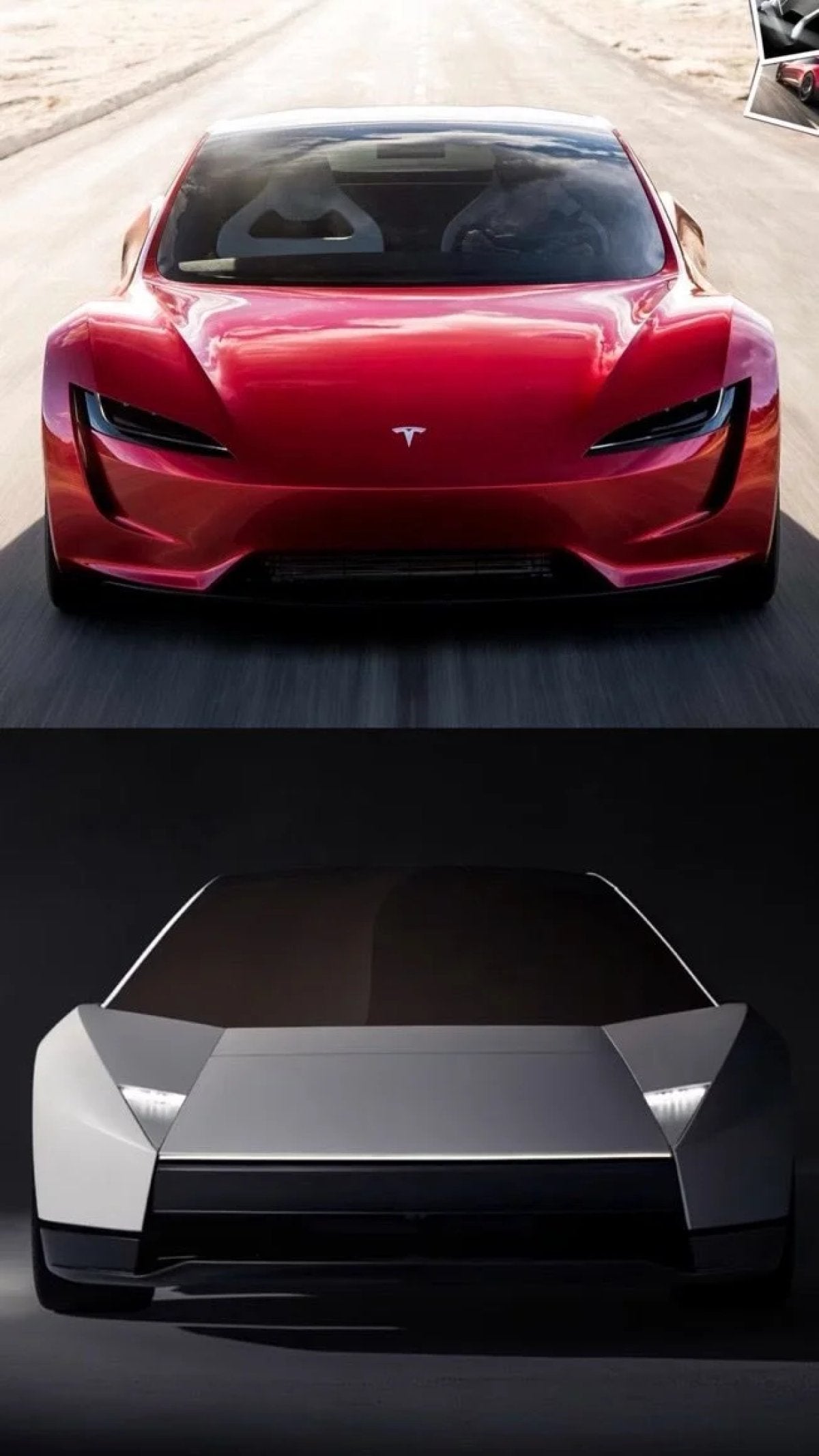
The Tesla Roadster slated for production in 2028 differs dramatically from the version first shown nearly a decade earlier. When the original next‑gen Roadster appeared as a surprise at the end of the 2017 Tesla Semi event, it was a smooth, curvy red sports car that aligned with the Model S and Model 3. Tesla at the time quoted a 0–60 mph time of 1.9 seconds, 620 miles of range, and a top speed above 250 mph.
The new Roadster, unveiled earlier this week, adopts a far more angular approach. Tesla says its overall design language has evolved from the S3XY lineup toward the sharp aesthetic of Cybertruck, Cybercab, and Optimus, with inspiration drawn from the SR‑71 Blackbird and the F‑35 fighter jet.
Front: Curves Versus Creases
The 2017 Roadster featured a rounded, sculpted nose with swept‑back headlights, a Tesla badge, and a wide lower intake—essentially a sleeker, lower Model 3 profile.

The latest model replaces those forms with a flat, faceted hood and a V‑shaped center panel. Headlights are concealed in small pop‑down openings at the corners, complemented by a slim light bar across the lower front. There is no Tesla logo at the nose.

Side Profile: A Wedge‑Shaped Supercar
From the side, the original emphasized flowing curves and rounded fenders. The new Roadster has a low, wedge‑like silhouette closer to a Lamborghini, a crisp beltline, and a black lower body.

Finishes lean into an aerospace theme. Ano White paint is inspired by coatings that protect rockets from UV exposure, extreme cold, and corrosion. A gold window tint mimics the copper coating on spacesuit visors, with titanium accents throughout. Lightweight thin‑spoke wheels replace the 2017 concept’s larger multi‑spoke design, and conventional doors are swapped for manual scissor‑style doors.

Rear: Thrusters on Display
The 2017 Roadster’s rear carried “TESLA” lettering across the trunk, thin taillights, and a smooth diffuser.

The redesigned car adds a full‑width taillight reminiscent of the refreshed Model Y, a faceted hatch, and an exposed diffuser that reveals thruster nozzles and suction fans—hardware that enables it to drive upside down (and more).

Hidden Aero That Transforms
A key shift is how much of the new Roadster physically changes. Tesla refers to this as Hidden Aero: flush‑mounted aerodynamics that conceal the car’s true form. Movable skirts span the front, sides, and rear to help create a vacuum under the car with the suction fans, panels on the fenders open, and the hood can open for additional airflow. An active rear wing deploys for downforce and stows for speed.

Activating Track Mode lowers the car and configures it for either a High‑Downforce or Low‑Drag setup. The 2017 concept offered no comparable moving aero.

Interior: Fewer Seats, More Thrust
The original Roadster promised 2+2 seating and a removable glass roof. The new car is a two‑seater—or a single‑seater in Rocket trim—with seats molded into the chassis to save weight. It retains a removable roof panel for open‑air driving.


Rear seats were eliminated to accommodate a 200‑liter Carbon Overwrapped Pressure Vessel that stores compressed gas for the thruster system. The Rocket trim adds another 400‑liter gas tank, which required removing the front passenger seat.
Inside, the Supersonic interior pairs Ultrawhite upholstery with gray microsuede bolsters. A steer‑by‑wire yoke sits ahead of a center touchscreen and two smaller forward displays.
Because the new Roadster is still years from production, smaller details may evolve, but the overall direction has clearly shifted from the S3XY era to the Cyber era.





Share:
Tesla Building Looping Track at Texas HQ for Roadster Stunts
Musk Confirms Bigger Tesla UI Text; 48-Point Option Requested