
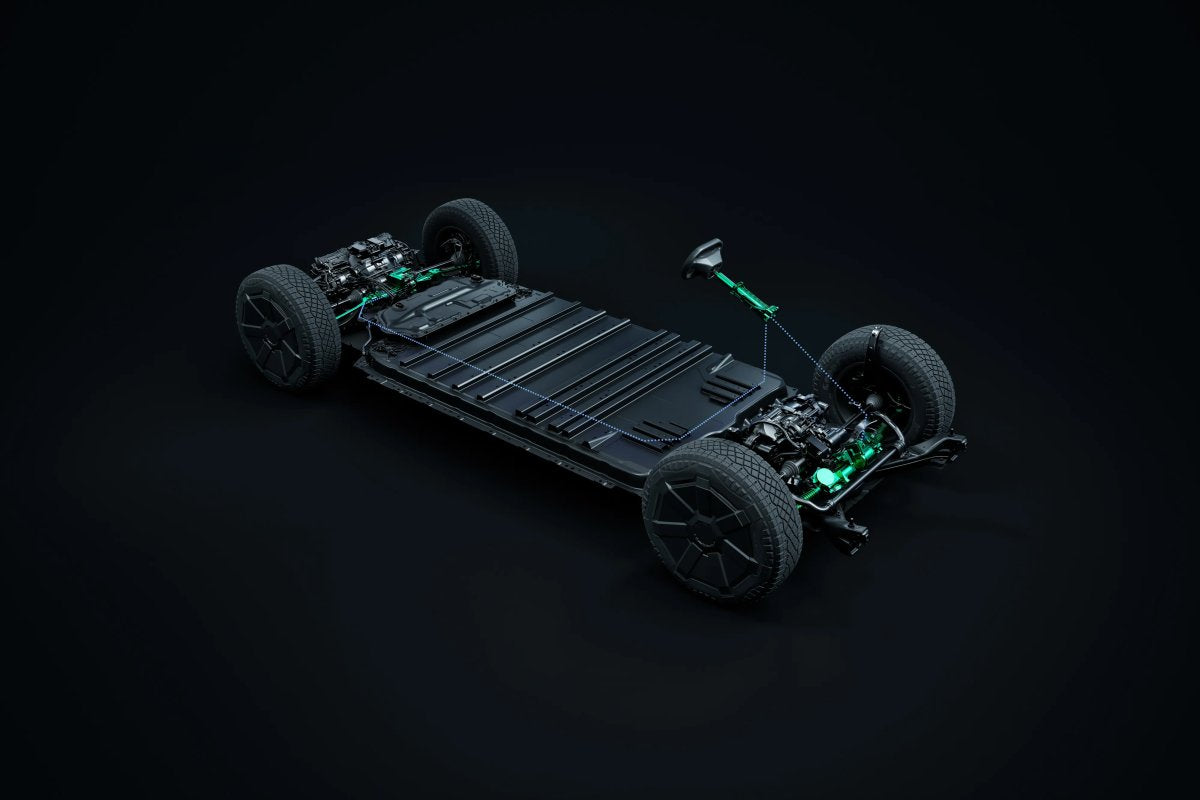

Amid the Q4 2025 Earnings Call, which focused heavily on Robotaxi, Optimus, and the end of production for the Model S and Model X, Tesla outlined a notable new direction for its last remaining flagship vehicle: the Cybertruck.
Originally promoted as an apocalypse-ready consumer pickup capable of daily errands and serious off-roading, the Cybertruck now appears poised to become the backbone of Tesla’s future autonomous logistics fleet.
CyberLogistics
During the investor Q&A, Elon Musk stated that the Cybertruck production line will eventually transition to a fully autonomous line centered on cargo delivery.
The traits that make the Cybertruck distinctive off-road — an unpainted stainless steel exoskeleton, dent-resistant durability, a full-size cargo bed, and a tight turning circle enabled by four-wheel steering — also lend themselves to last-mile urban logistics.
In this role, the Cybertruck would be less a rival to the Ford F-150 Lightning or Rivian R1T and more a competitor to the Ford eTransit and Rivian EDVs, with a crucial difference: no driver.
By removing the steering wheel, pedals, and other driver-oriented amenities, Tesla could trim additional costs while building on a platform that stands up well to the dings, scratches, and wear typical of commercial city driving.
No Controls, All Cargo
Delivering this shift would require more than a software update. It would mean modifying the production line to build a no-controls variant of the Cybertruck, potentially with a different rear body.
Musk’s described use case is localized cargo delivery within a city. This aligns with the Transport-as-a-Service (TaaS) ecosystem Tesla is developing: while the Cybercab and Robovan move people, the autonomous Cybertruck moves packages. It functions as a dedicated logistics robot, transporting goods between warehouses and drop-off points without human intervention, leveraging the same FSD stack.
A New Evolution
The shift comes as Cybertruck sales soften. Tesla’s Other Vehicles category, including the S/X and CT, was down 48% in 2025, and the luxury pickup market is filling with alternatives such as the R1T and Sierra EV.
Rather than chase consumer driveway share, Tesla is leaning into the Cybertruck’s strengths — durability, volume, and maneuverability — alongside FSD to address last-mile logistics in autonomous urban environments.



Share:
SpaceX Airs First-Ever Super Bowl Ad for Starlink [VIDEO]
California Reserves $165 Million for Tesla Semi