
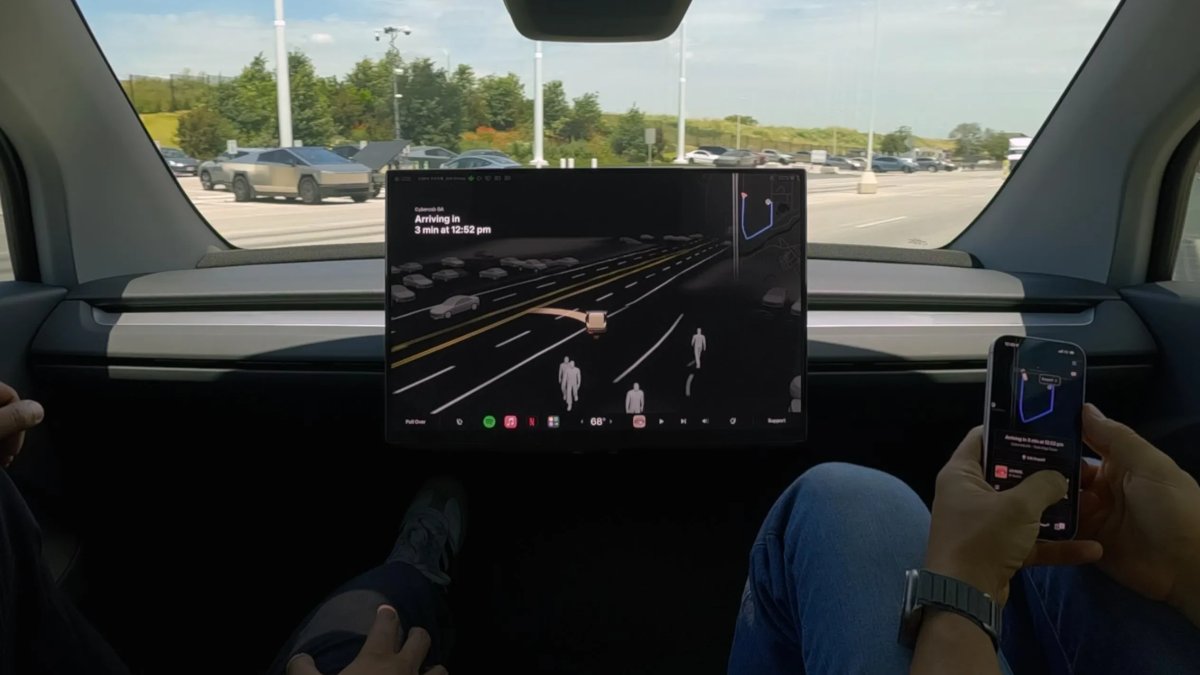
Tesla Hints at Bringing Robotaxi Service to South America

Tesla appears to be quietly preparing to take its autonomous ride-hailing network beyond the United States. New job postings suggest South America may be among the first international regions to receive the Robotaxi service.
As observed by longtime Tesla watcher @tslaming, the company is hiring AI Safety Operators in Colombia and Chile. These roles would help oversee daily operations of an autonomous ride-hailing network while supporting dynamic data collection.
What the Job Listings Reveal
The openings include full-time engineering positions in Bogotá and El Poblado in Colombia, and in Las Condes in Chile. The descriptions say AI Safety Operators will drive engineering vehicles 6 to 8 hours per day to gather camera and audio data, write drive reports, and debug software equipment.
Importantly, the postings specify that operators will "oversee daily operations of ride-hailing services including driver/rider management."

Although the positions center on vehicle testing and data collection for the Full Self-Driving (Supervised) team, the reference to ride-hailing management indicates Tesla is setting up the framework for autonomous fleet operations in these areas.
Early Stages of International Expansion
This development coincides with Tesla’s Q2 2026 earnings call, where the company said its Robotaxi fleet has crossed 380,000 unsupervised miles. At the same time, Tesla identified Las Vegas, Nevada, and Phoenix, Arizona, as upcoming U.S. markets where launch preparations are underway. There has been no official announcement regarding Robotaxi in South America.
Taken together, this suggests the South American effort is still in an early validation phase focused on mapping and data collection rather than a near-term public launch. Even so, the listings represent the first concrete sign of Robotaxi activity outside U.S. borders.
In the U.S., Tesla recently launched unsupervised Robotaxi rides in Orlando and Tampa following a Miami rollout earlier this month. The company has confirmed Robotaxi vehicles are already running FSD v15, which it had framed as a prerequisite before really ramping up Robotaxi deployment, so network growth is expected to accelerate. International deployments, however, are likely further out.
As public testing of steering wheel-less Cybercabs continues, the dedicated vehicle is expected to replace current Model Y robotaxis to enable faster scaling across the U.S. and internationally. Meanwhile, collecting localized driving data in Chile and Colombia will help the Robotaxi software learn regional road layouts and traffic patterns ahead of any formal launch.







Share:
Tesla Robotaxis Are Running FSD V15
Elon Musk Admits He Got 'Too Involved' in Politics