
Tesla Cybercab Doesn't Support AC Charging

Engineered primarily for commercial fleet operations, the two-seater autonomous Cybercab omits home AC charging, a feature typically expected in consumer vehicles.
Kyle Conner (@itskyleconner) of Out of Spec Reviews reported on X after hands-on time in Austin:
“It does not support AC charging. Perhaps if they ever sell a consumer version it would be needed but for fleet only, there’s no OBC - which is kind of cool for cost / durability optimization.”
This confirms the Cybercab lacks an onboard charger (OBC) to convert alternating current (AC) into direct current (DC). As a result, connecting it to a standard Level 2 home Wall Connector or a 120V household outlet will not charge the vehicle; it accepts only DC fast charging.
Fleet Economics Over Traditional Home Charging
Dropping the onboard charger can benefit ride-hailing fleets by reducing weight, manufacturing complexity, thermal management requirements, and production costs. For a vehicle intended to operate nearly continuously, spending hours on an 11.5 kW AC home charger is impractical.

In line with that goal, Tesla is developing dedicated commercial infrastructure focused on rapid turnaround. The company is already building large charging and maintenance hubs to support its Robotaxi rollout and service driverless fleets.
If private buyers eventually purchase Cybercabs for use on the autonomous network, they may not need to rely solely on Superchargers or other public charging options. Tesla could open these automated depots to private owners, bundling fast charging, automated cleaning, and routine maintenance into its ride-hail service commission.
What DC-Only Charging Means for Retail Ownership
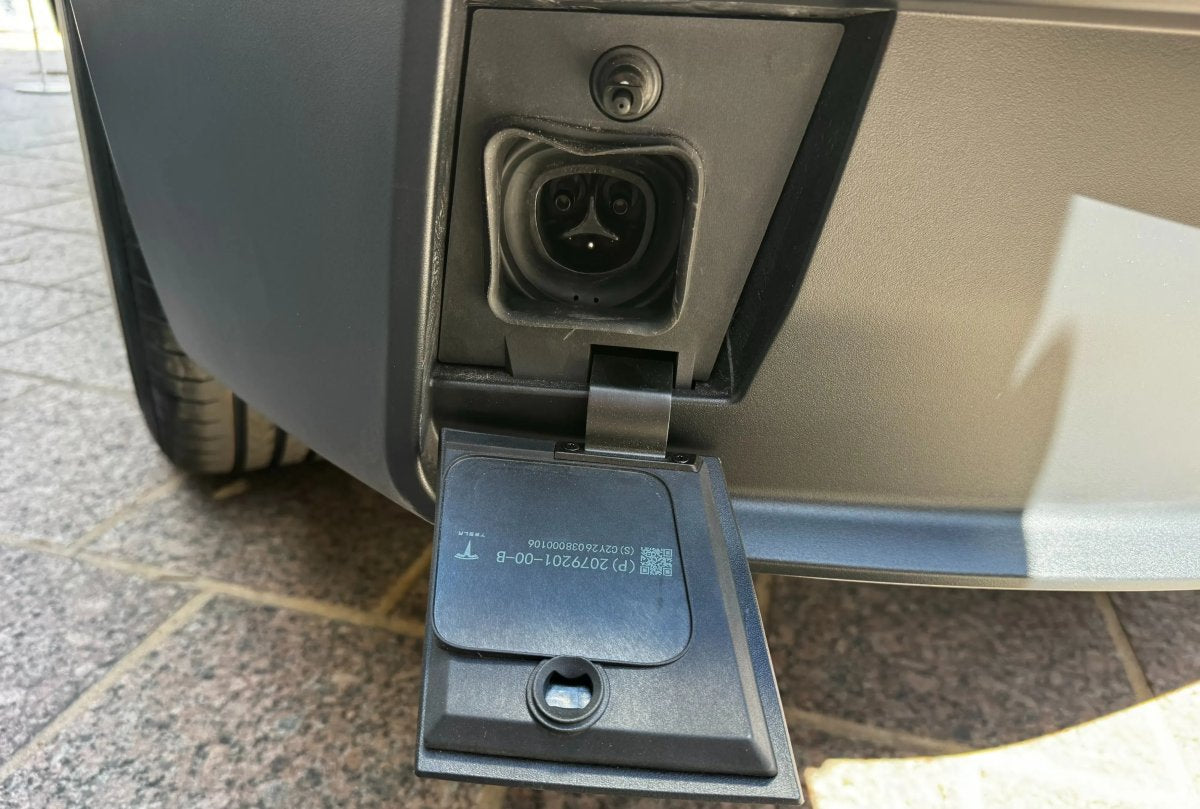
The absence of an AC charger raises questions for potential consumer ownership. At present, Cybercab units rolling out for commercial rides use a hidden NACS port for wired fast charging.
Tesla ultimately plans to introduce wireless charging for the dedicated Robotaxi fleet and is developing an inductive charging system designed for high-efficiency power transfer. If the two-seater is later offered for personal ownership, a home wireless charging pad could integrate AC-to-DC conversion hardware within the ground unit instead of inside the car.

For now, the platform remains strictly commercial. At this week’s official Cybercab launch event in Austin, Tesla did not discuss consumer purchase timelines, retail pricing, or home equipment. Elon Musk has previously suggested individual purchases could arrive before year-end, but without hardware revisions or an external DC home charger, the Cybercab is built to run on commercial DC power.


Share:
Tesla Cybercab Event Highlights: Everything Tesla Showed Off
NHTSA Launches Probe Into Tesla Cybercab as Public Rides Begin