
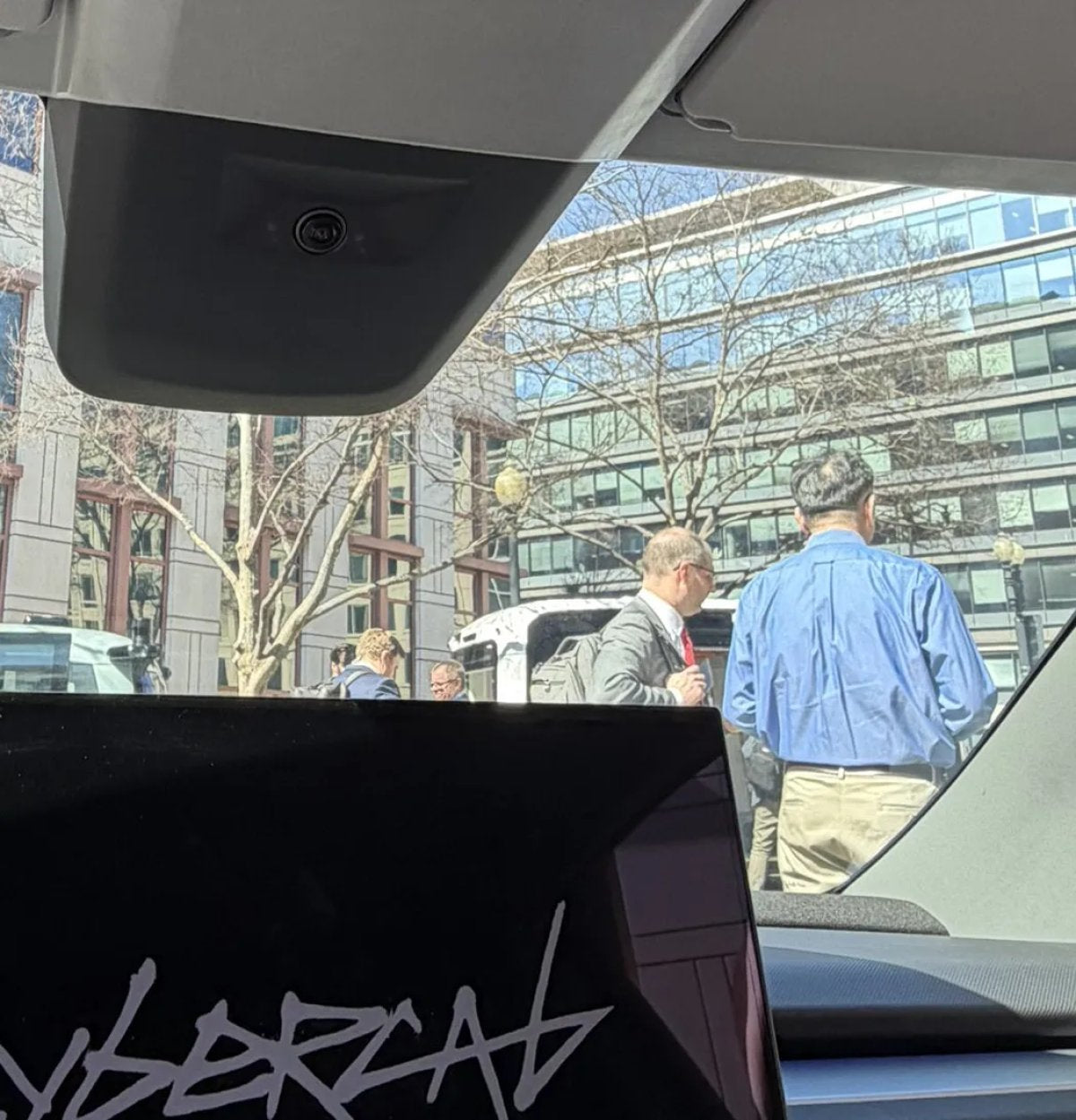
Tesla’s autonomous future made a prominent appearance in Washington, D.C., where the company showed the production-ready Cybercab at USDOT Headquarters during the National Autonomous Vehicle Safety Forum.
The public was able to sit inside and experience the cabin, according to @TeslaMaryland. The showcase represents a shift from the validation units seen earlier to a vehicle that appears ready for the assembly line.

The Tesla Robotaxi
The Cybercab is a purpose-built, two-seat electric vehicle intended to anchor Tesla’s Robotaxi network. Unlike a conventional car, it is engineered for high-utilization ride-hailing. While owners are expected to be able to contribute their own vehicles to the fleet over time, the Cybercab is designed to scale quickly with an ultra-low cost of ownership.
Cabin Camera, Interior Trunk Camera and More
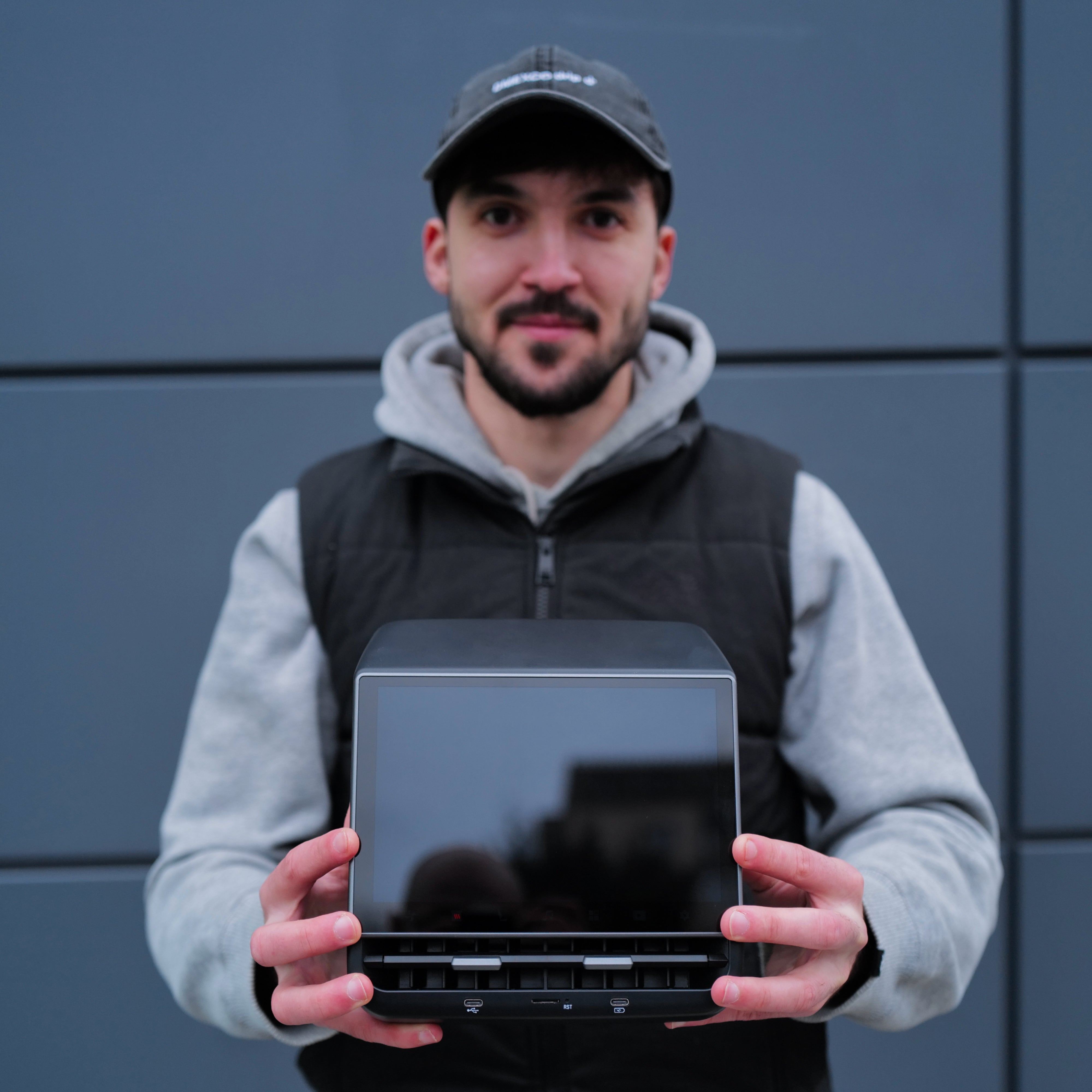
The production unit shown at the DOT includes several refinements over the original concept. A standout change is the display — a roughly 21-inch screen, the largest ever installed in a Tesla vehicle. The interior also adds two USB-C ports in the center console and an unusually large interior camera.
The concept’s carpeted rear storage has been replaced by a more durable, non-carpeted surface in the production version. The cabin itself remains carpeted and offers ample legroom for very tall passengers. Controls are minimal: there is no steering wheel or pedals, and the only manual input is an emergency stop button positioned above the screen. A pair of door release buttons sits below the cupholders in the center console.
On the exterior, the headlights are integrated directly into the front lightbar for a seamless appearance that differs from the Model Y’s layout. The vehicle also appears to add a trunk camera — a first for Tesla — which could help ensure passengers don’t leave items behind. To keep the Full Self-Driving hardware’s view unobstructed, the Cybercab equips a high-pressure washer system for every external camera, powered by a dedicated tank with a multi-port discharge system.
Cybercab Side and Rear camera washer operation. I captured this today as Cybercabs were being loaded onto transport trucks.
— Joe Tegtmeyer 🚀 🤠🛸😎 (@JoeTegtmeyer) March 10, 2026
This is a good view of how these work! pic.twitter.com/jfLtkTHzZD
Door Opening Button
This is also the first look at the Cybercab’s door-opening button, which is conceptually similar to the Cybertruck’s. While the functionality is alike, the Cybercab’s implementation appears more resistant to road grime and ice that could interfere with operation. The Cybertruck’s door button is a larger, physical button that’s pressed down.
Neither solution is particularly intuitive at first glance, especially without any labeling, but the Cybercab’s version seems more durable and less prone to winter-related issues.
Mass Production and Rollout
The Cybercab is central to Tesla’s transition from a traditional automaker to an AI and robotics-focused company. Mass production is officially slated to begin at Gigafactory Texas in April, with deliveries expected to ramp in the following months.
The unit on display in D.C. lacks traditional controls, though Tesla has acknowledged that early vehicles might ship with steering wheels if regional regulations require them. The company appears confident in the wheel-less design, as it is already offering fully unsupervised Robotaxi rides in Austin. Although the display model still appears to have a concealed charging port, the long-term plan is to move to wireless induction charging.
As Tesla approaches the April production target, the D.C. showing serves as a final "sanity check" for regulators and the public. The move to a driverless society is no longer a "someday" project; for Tesla, it starts next month.




Share:
Tesla and Google Launch “Utilize” to Lower Electricity Costs
Tesla Announces Joint 'Digital Optimus' Project With xAI