
NHTSA Proposes Optional Cyan Lamps for Driverless Vehicles

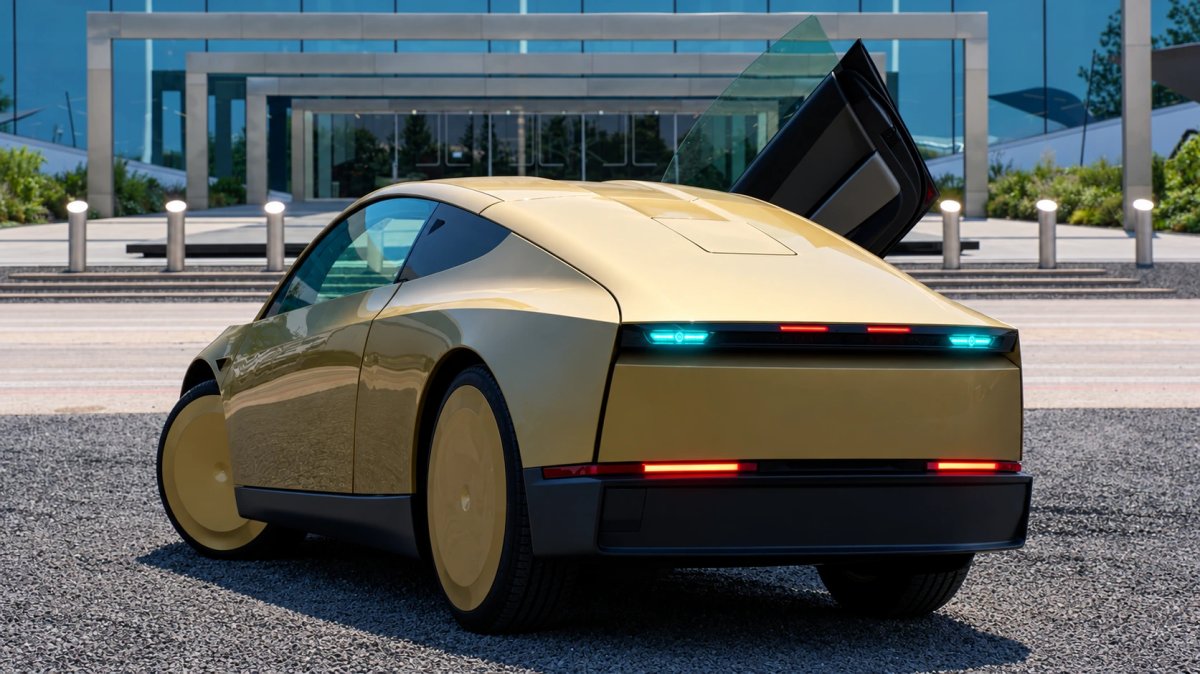
NHTSA has filed a proposed rule to update Federal Motor Vehicle Safety Standard (FMVSS) 108 for autonomous vehicles that lack a steering wheel or pedals, such as Tesla’s Cybercab. A key element is an optional set of cyan "ADS marker lamps" intended to indicate when a vehicle is operating itself.
The filing was spotted by @scotsrule08 on X. The proposal is set to appear in the Federal Register on October 26, followed by a 30-day comment period.
How the Cyan Lamps Would Work
According to the filing, ADS marker lamps would be permitted—but not required—on passenger cars, multipurpose vehicles, trucks, and buses. Vehicles could install one or two cyan lamps on the front, on each side, and on the rear, all at least 15 inches above the ground. A single front or rear lamp would be placed on the centerline; if two lamps are used, they must be at the same height and evenly spaced. Multi-lamp configurations beyond those options would not be allowed.
The lamps would remain steadily illuminated (not flashing), and all units would turn on and off together. They could activate automatically when the vehicle is operating without anyone expected to watch the road and must deactivate when an occupant is expected to monitor it. They are intended for true driverless operation, not FSD (Supervised). During Tesla’s Q3 earnings call earlier this week, Ashok Elluiswamy said unsupervised FSD could reach the first customer vehicles in Q2 2027.
Even if finalized, the lamps would be optional, so automakers could choose not to include them.
Mercedes tested similar turquoise lighting for its Drive Pilot system between 2023 and 2025, with approvals limited to California and Nevada. Previous discussions about adding a self-driving light to Tesla vehicles have noted benefits such as a common visual language and a clear indicator for autonomous operation, as well as concerns that the lights could make vehicles a target or encourage riskier behavior by others.

Other Updates in the Proposal
The cyan lamps are only part of the update. Requirements for physical turn signal, hazard, and high-beam controls would apply only to vehicles with manual driving controls, allowing the automated driving system in vehicles like the Cybercab to handle those functions without traditional switches. Certain dashboard indicators for turn signals and high beams would also be eliminated in such vehicles.
NHTSA also proposes removing legacy restrictions on vertical headlamp layouts and permitting integrated headlights to be tested at manufacturer-specified voltages instead of only 12.8 volts. The proposal builds on NHTSA’s earlier move to drop the manual brake pedal requirement for vehicles driven exclusively by an automated system.
Cybercab Still Under Scrutiny
These rule changes would not resolve ongoing oversight. NHTSA continues to investigate how the Cybercab was certified for commercial deployment, and Tesla recently received an extension to respond.

Meanwhile, deployment continues. Tesla has more than 300 Cybercabs operating in Austin, with Dallas rides expected to start next month. The company is also attempting to sell its first Cybercabs to customers before the end of the year, leaving about two months to do so.
After the 30-day comment period ends in late November, NHTSA would still need to finalize the rule. If adopted, the lighting provisions would provide a clearer federal pathway for the Cybercab’s lighting, whether or not Tesla opts to use the cyan lamps.


Share:
Tesla Supercharging Now $0.569/kWh for Non-Members, Up 15%
2028 Tesla Roadster Thrust Prototype Shown at LA’s Petersen Oct 24–27