
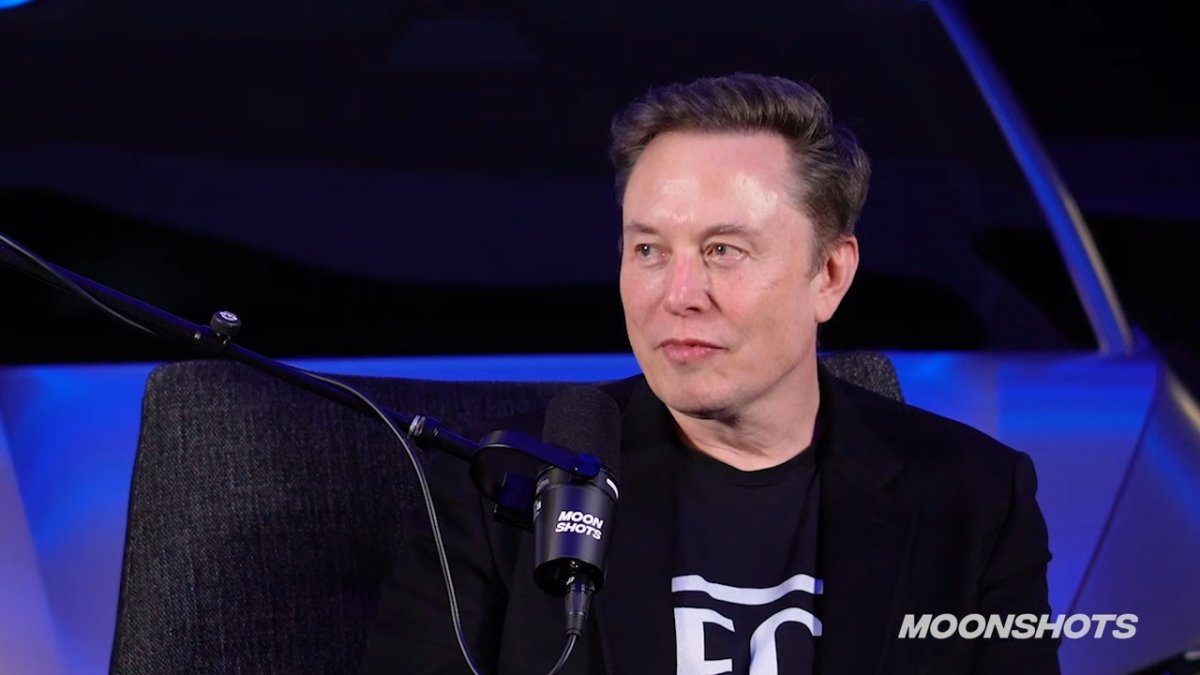

In a wide-ranging conversation with Peter Diamandis released this week, Elon Musk provided major updates on Tesla’s direction, outlining an expansion at Giga Texas, new information about the next-generation Roadster, and a timeline update for the Cybercab.
The interview, which was recorded in late December, concentrated on the convergence of robotics, energy, and AI. Although the discussion ranged from space travel to universal income, there are three primary developments worth highlighting here.
The Optimus Factory
Perhaps the most significant announcement was a massive new facility at Giga Texas dedicated entirely to Optimus, Tesla’s humanoid robot.
Elon stated that Giga Texas will host 8 million square feet of production space solely for Optimus. For comparison, the existing vehicle factory at Giga Texas covers about 11.5 million square feet. This new facility will effectively nearly double the site’s manufacturing footprint and marks a major step toward Tesla’s shift into large-scale robotics production.
He also described a recursive vision for the plant in which Optimus robots would eventually build more Optimus robots, driving exponential growth in production capacity. Musk reiterated his belief that the eventual market for humanoid robots could reach billions of units.
The Roadster
Although a Roadster reveal was promised last year, the timeline slipped. In this interview, Musk shared additional details about the Roadster’s advanced features.
On the SpaceX package, he confirmed the vehicle will have hover capability using cold-gas thrusters, but he declined to specify how long it can hover. Sustained hovering would require storing substantial amounts of cold gas, which is technically challenging.
Musk framed the Roadster as Tesla’s definitive supercar: “It will be a cool demo. If safety is your #1 goal, don’t buy the Roadster. We’ll aspire not to kill anyone in this car. It’ll be the best of the last of the human driven cars.”
Elon Musk in new interview on the upcoming next-generation @Tesla Roadster:
— Sawyer Merritt (@SawyerMerritt) January 6, 2026
“It will be a cool demo. If safety is your #1 goal, don’t buy the Roadster. We’ll aspire not to kill anyone in this car. It’ll be the best of the last of the human driven cars.” pic.twitter.com/vhXbL9ucqL
The Cybercab
On autonomy, Musk reiterated ambitious timelines for the Cybercab. He predicted that by the end of next year (likely late 2026) Cybercabs would be operating autonomously in public.
Congress is set to vote on allowing manufacturers to increase the number of vehicles they have in production without traditional controls, which could significantly affect Tesla’s Cybercab rollout.
He also noted that millions of Tesla vehicles function as powerful AI computers on wheels. When not actively driving, those vehicles could become part of Tesla’s broader AI infrastructure.
Cortex 2
Tesla is also expanding stationary compute. The next-generation Cortex 2 training cluster is expected to draw 500 MW and be operational sometime in the middle of this year, advancing Tesla’s compute capabilities.
Watch the Full Interview
The full interview is available below on the Moonshots podcast; it’s a long but informative watch.



Share:
Tesla Tool Confirms Cybertruck Has Active Noise Cancellation Hardware
Tesla Improves Vehicle Warranty, Adds Unlimited Mileage in Australia and New Zealand