
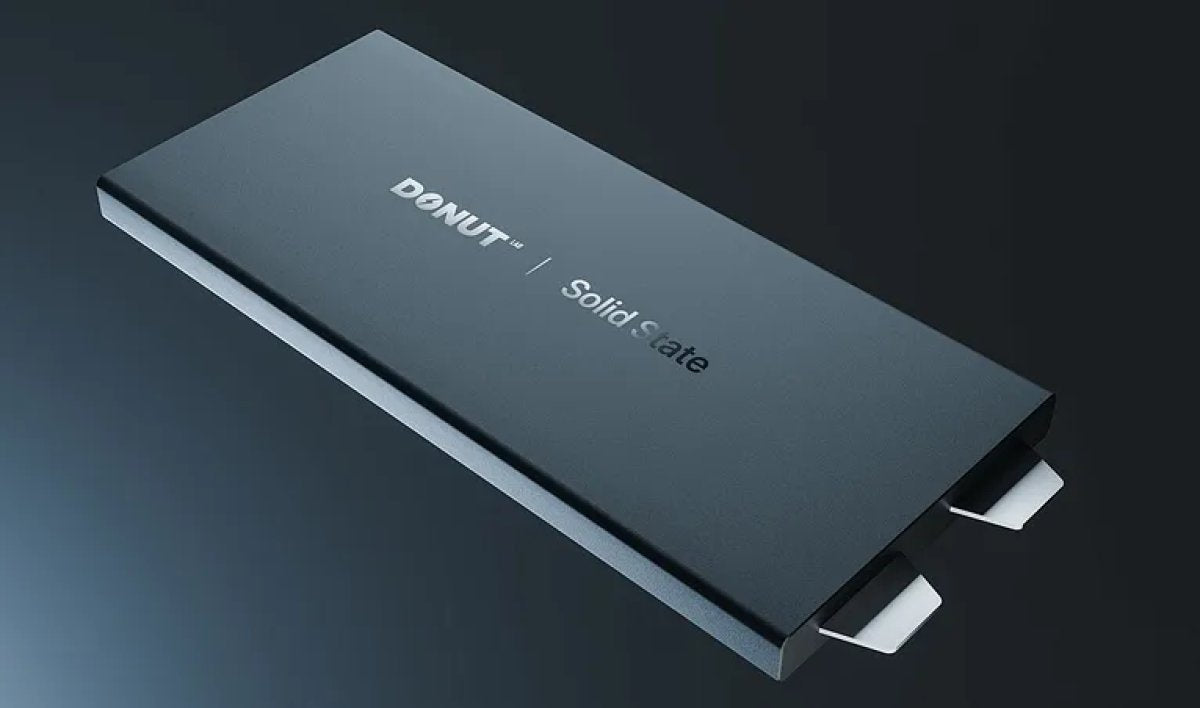

At CES 2026, a little-known startup, Donut Lab, announced what it said was the worlds first production-ready solid-state battery, citing headline specifications of 400Wh/kg energy density, a 100,000-cycle lifespan, and the ability to charge from 080% in under five minutes.
After skepticism from industry experts, Donut Lab launched its I Donut Believe campaign and shared independent test results from the VTT Technical Research Centre of Finland to support its claims.
A closer examination of the VTT documentation suggests the team has built a cell that can take in very high current, but a fully realized solid-state breakthrough may still be some distance away.
The VTT Report: What Was Actually Tested?
Understanding third-party testing is key: VTT is a state-owned, world-class research organization. When it publishes a figure, that figure is accurate. However, VTT performs specific tests requested and funded by the client, functioning as a testing laboratory rather than an auditing body.
Comparing Donut Labs marketing statements with the VTT data provided in the report yields the following:
0 The fast-charging claim is substantiated. VTT confirmed a 26 Ah Donut cell charged from 0% to 80% in 4.5 minutes at an 11C rate.
2 The energy density claim remains unverified. The headline figure of 400 Wh/kg3roughly double typical lithium-iondis not verifiable because the report omits the cells weight and physical dimensions.
3 The 100,000-cycle lifespan claim was not tested. VTT reported only a small number of fast-charge cycles, far short of where degradation would appear.
Thermal Red Flag
Although the rapid-charge results are genuine and noteworthy, the test setup raises concerns for practical automotive use.
In the 11C charging test, the cell sat between large aluminum heat sinks for passive temperature control. Even then, its surface temperature rose to 63b0C. In another run with a single heat sink, the cell reached 90b0C, forcing a temporary pause to cool the battery.
Analysts estimate that scaling the same passive thermal mass to a full EV pack would entail thousands of pounds of heat sinks or an equivalent level of heat rejection via active cooling. Donut Lab promotes the battery as not needing active cooling, yet the data show that charging at the advertised rates generates significant, potentially difficult-to-manage heat.
Manufacturability At Scale
Producing one high-performing pouch cell in a controlled environment is not the same as manufacturing millions reliably and at low cost.
For now, Donut Labs main real-world use case is a partnership with Verge Motorcycles, a premium electric bike maker. Incorporating a limited number of cells into a high-end, low-volume motorcycle is a solid demonstration but is far from transforming the broader EV landscape.
Despite indications of Q1 2026 availability for new bikes, Verges CEO and website have indicated that volume customer deliveries will likely extend late into the year or even into 2027 as supply-chain hurdles and regulatory approvals are addressed.
If the cell performs as presented, it could catalyze sweeping changes across EVs and portable electronics. Until independent auditors can weigh and test a production-intent Donut Lab cell, taking the companys I Donut Believe campaign literally remains reasonable.






Share:
Battery care guidance from Tesla: avoid routine Supercharging, set daily charging to 80%, and more
Tesla Energy to Source U.S.-Made LFP Batteries from LG